




What's Happening?
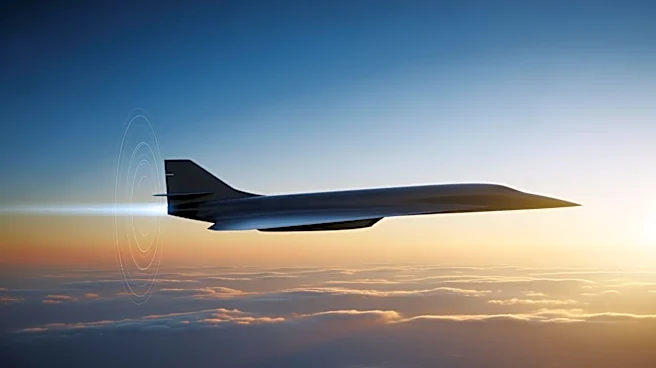
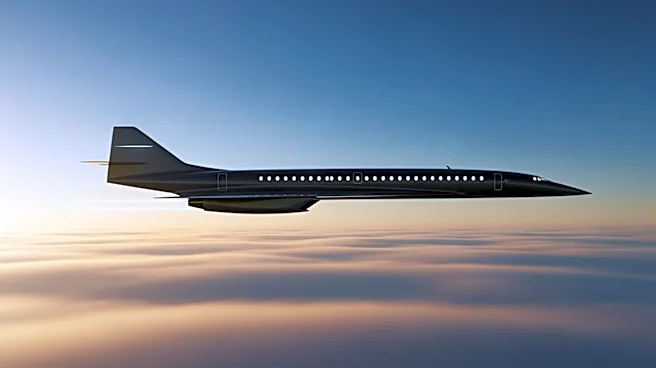
NASA's X-59 research aircraft has successfully completed its first supersonic flight, reaching Mach 1.1 at an altitude of 43,400 feet during an 81-minute test mission from Edwards Air Force Base, California. This milestone is part of NASA's Quesst mission,
which aims to develop quieter supersonic travel by replacing the traditional sonic boom with a softer 'thump.' The X-59 is designed to gather data that could help establish new noise standards for future commercial supersonic flights over land. NASA Administrator Jared Isaacman noted the aircraft's rapid progress, with 16 flights completed in the past 90 days, and plans to advance to Mach 1.4 testing soon.
Why It's Important?
The successful supersonic flight of the X-59 represents a significant advancement in aviation technology, potentially revolutionizing air travel by making it faster and quieter. If the X-59's quiet supersonic concept proves viable, it could lead to the development of new regulations that allow for commercial supersonic flights over land, which are currently restricted due to noise concerns. This could open up new markets and opportunities for the aviation industry, providing faster travel options and reshaping how communities experience aircraft noise. The project also highlights NASA's role in pioneering innovative solutions to longstanding challenges in aviation.
What's Next?
NASA plans to continue testing the X-59, with upcoming flights expected to reach Mach 1.4. These tests will simulate conditions for future community overflights, where residents will evaluate the aircraft's sound signature. The data collected will be crucial in developing new noise standards for supersonic travel. The success of these tests could lead to broader acceptance and implementation of supersonic flights over land, potentially influencing international aviation policies and standards.