



What's Happening?
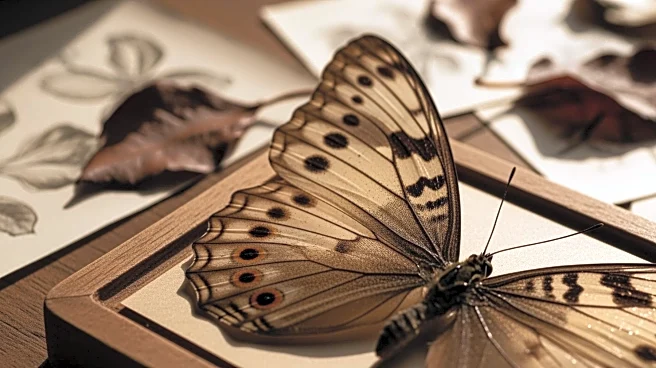
A team of scientists has discovered nine new butterfly species within the lepidoptera collection of the Natural History Museum in London. These species, originating from Colombia, Peru, Brazil, and French Guiana, were identified through a combination
of geographical, morphological, and molecular analyses. The research, published in the journal Zootaxa, involved comparing modern DNA with ancient DNA from historical specimens. This approach allowed the team to resolve previously confused species and uncover greater biodiversity. The butterflies, part of the Thereus species group, were initially thought to be fewer in number. The discovery highlights the museum's extensive collection, which includes 12.5 million pinned specimens and one million papered specimens. The findings underscore the importance of museum collections in understanding and preserving biodiversity.
Why It's Important?
The discovery of these new butterfly species is significant for biodiversity conservation efforts. By identifying and naming new species, scientists can better understand the ecological roles and conservation needs of these insects. This knowledge is crucial for protecting species that may be endangered or whose habitats are threatened. The research also demonstrates the value of museum collections as repositories of biological diversity, providing insights into species that may no longer exist in the wild. This work can inform conservation strategies and highlight the urgency of protecting habitats that are at risk of disappearing. The findings contribute to a broader understanding of biodiversity and the need for its preservation in the face of environmental changes.
What's Next?
The identification of these new species is expected to aid conservationists in developing targeted strategies to protect endangered butterfly species. The research team hopes that the findings will raise awareness about the importance of preserving natural habitats and the species that inhabit them. Further studies may focus on the ecological roles of these newly identified butterflies and their interactions with other species. Conservation efforts may also involve habitat restoration and protection initiatives to ensure the survival of these butterflies. The museum's collection will continue to serve as a vital resource for future research and conservation planning.