
What's Happening?
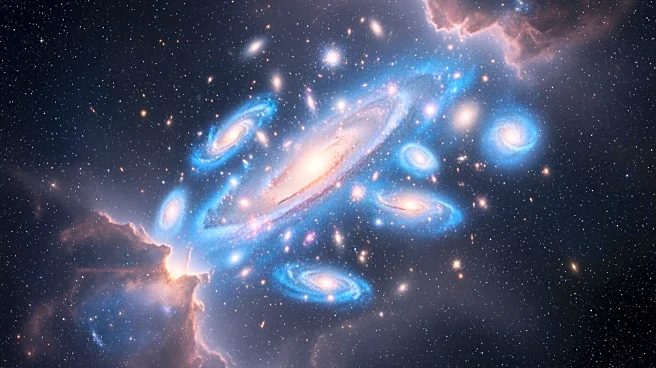
Astronomers have identified a galaxy cluster, SPT2349-56, that is unexpectedly hot, challenging existing theories of galaxy cluster formation. This cluster, observed using the Atacama Large Millimeter/submillimeter
Array (ALMA) in Chile, existed just 1.4 billion years after the Big Bang. It contains over 30 active galaxies and three supermassive black holes, forming stars at a rate 5,000 times faster than the Milky Way. The intracluster medium's temperature is five times hotter than predicted by current models, suggesting that galaxy clusters can form more quickly than previously thought. The study, published in Nature, indicates that early universe conditions, possibly influenced by supermassive black holes, contributed to this rapid development.
Why It's Important?
This discovery has significant implications for our understanding of galaxy formation and evolution. It suggests that the processes governing the development of galaxy clusters may be more dynamic and rapid than current models predict. This could lead to a reevaluation of how galaxies and their clusters evolve over time, impacting theories about the early universe's structure and the role of supermassive black holes in shaping it. The findings could influence future astronomical research and the development of new models to better understand cosmic evolution.
What's Next?
Researchers plan to further investigate the interactions within this unusual cluster, focusing on the intense star formation, active black holes, and the overheated atmosphere. These studies aim to uncover how these elements interact and contribute to the formation of present-day galaxy clusters. The findings could lead to new insights into the processes that govern galaxy cluster formation and evolution, potentially reshaping our understanding of the universe's history.