








What's Happening?
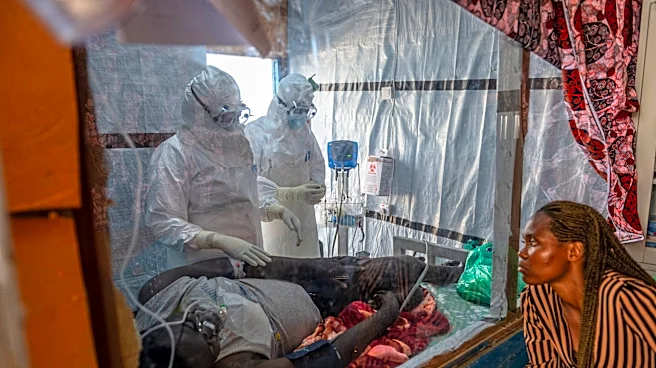
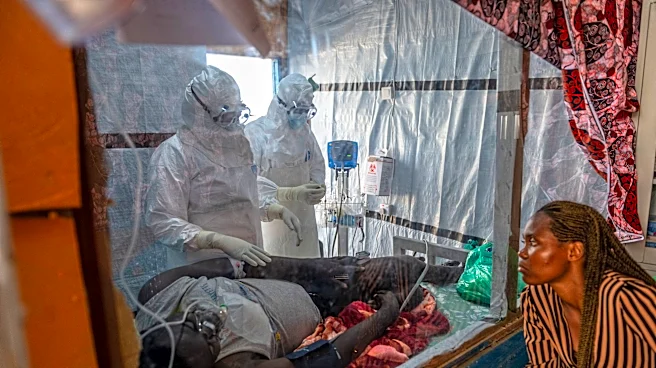
The Democratic Republic of Congo is grappling with a severe Ebola outbreak that has resulted in nearly 1,000 deaths. The outbreak, declared on May 15, is caused by the Bundibugyo virus, which currently has no approved vaccines or treatments. The rapid
spread of the virus has been exacerbated by community resistance to health teams and attacks on health facilities. Health workers have gone on strike due to unpaid wages, further complicating containment efforts. The World Health Organization has indicated that the actual number of cases could be two to four times higher than reported, as many cases are not being monitored. The outbreak is considered the fastest in history, surpassing the 2013-2016 outbreak in terms of speed and lethality.
Why It's Important?
The Ebola outbreak in Congo poses a significant threat to public health and safety, not only within the country but potentially on a global scale. The lack of effective vaccines and treatments for the Bundibugyo virus strain complicates efforts to control the outbreak. The situation is further aggravated by community resistance and attacks on health workers, which hinder the response efforts. The outbreak's rapid spread and high mortality rate highlight the urgent need for international support and intervention to prevent a wider epidemic. The ongoing conflict and instability in the region also pose challenges to implementing effective health measures.
What's Next?
Efforts to contain the outbreak will likely require increased international support and resources. The Democratic Republic of Congo's government, along with international health organizations, may need to intensify public health campaigns to educate communities about the importance of cooperating with health teams. Addressing the grievances of health workers, such as unpaid wages, will be crucial to ensuring their continued participation in response efforts. The international community may also need to explore the development of vaccines and treatments for the Bundibugyo virus to prevent future outbreaks.