



What's Happening?
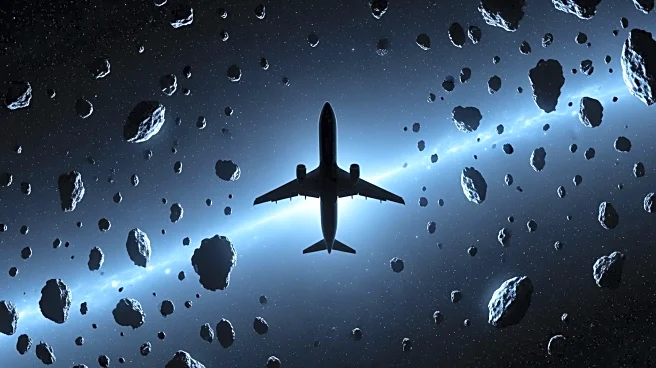
Experts warn that the risk of space debris impacting airplanes is increasing. Space debris, including spent rocket stages and defunct satellites, frequently re-enters Earth's atmosphere. While most debris burns up, some fragments can survive and pose
a threat to aircraft. The probability of debris striking an aircraft is small but growing, with predictions suggesting a 1 in 1,000 chance by 2030. The aviation industry is working with space agencies to develop strategies for managing airspace closures and minimizing risks.
Why It's Important?
The growing risk of space debris impacts on aviation highlights the need for improved space traffic management and debris mitigation strategies. As satellite constellations expand, the potential for debris-related incidents increases, posing safety and economic challenges. Effective coordination between space and aviation sectors is essential to prevent air traffic disruptions and ensure passenger safety. The development of precise prediction models and international cooperation will be crucial in addressing these challenges.
What's Next?
Efforts to improve space debris tracking and prediction are underway, with initiatives like ESA's DRACO mission aiming to gather data on debris re-entry. Aviation authorities and space agencies are collaborating to establish standards for airspace closures and risk assessment. As space activity continues to grow, ongoing research and policy development will be necessary to manage the increasing complexity of space traffic and its impact on aviation.