
What's Happening?
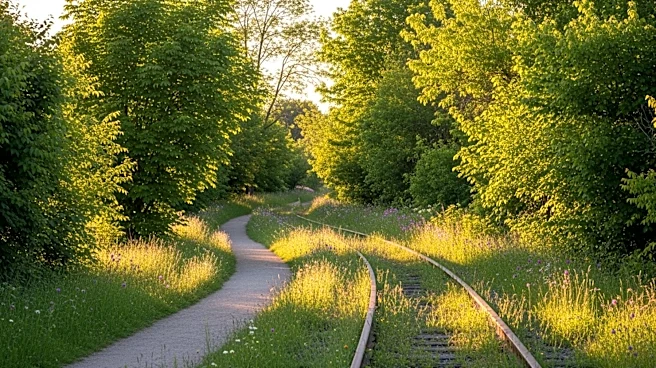
Chicago is advancing with the Englewood Nature Trail project, which aims to convert a 1.75-mile stretch of an abandoned railway into a vibrant community space on the city's South Side. The trail will run
from Wallace Street to Hoyne Avenue, crossing 26 viaducts and connecting various community assets such as homes, gardens, and gathering spaces. The project is guided by the 'Green Healthy Neighborhood Plan,' which emphasizes urban agriculture, public art, and job creation. The corridor, originally built by the Pennsylvania Railroad in 1917, has been unused since the early 1960s. The city acquired the land in 2018 and has since secured $26 million in funding from city and federal sources for the design and construction phases. The Chicago Department of Transportation and the Department of Planning and Development are spearheading the project, with construction expected to take place between 2027 and 2029.
Why It's Important?
The Englewood Nature Trail project is significant as it represents a major urban revitalization effort aimed at enhancing community connectivity and promoting sustainable development. By transforming an underutilized space into a community hub, the project is expected to provide economic, environmental, and social benefits. It will create new employment opportunities, support local agriculture, and offer a platform for public art, thereby enriching the cultural landscape of the area. Additionally, the project aligns with broader city goals related to health, economic development, climate resilience, and transportation. The initiative is a model for how cities can repurpose obsolete infrastructure to meet contemporary urban needs, potentially inspiring similar projects in other urban areas.
What's Next?
The next steps for the Englewood Nature Trail project include finalizing design guidelines, which are expected to be completed soon. The Chicago Department of Transportation plans to host a public meeting in the winter to present the final design. As the project progresses, continued community engagement will be crucial to ensure that the trail meets the needs and expectations of local residents. Stakeholders, including city officials, community organizations, and residents, will likely continue to collaborate to address any challenges that arise during the implementation phase. The successful completion of the project could lead to further investments in urban green spaces and infrastructure improvements across Chicago.