







What's Happening?
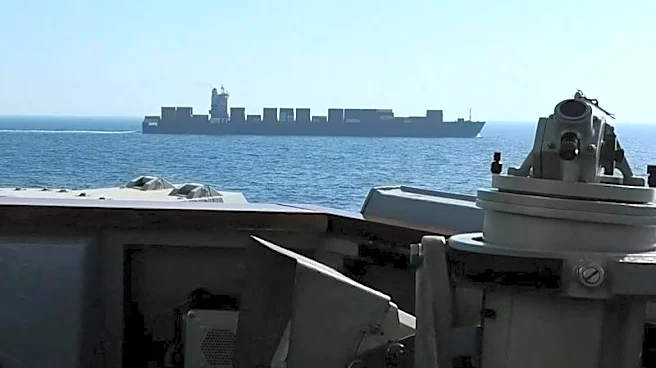
Japanese Prime Minister Sanae Takaichi has highlighted the severe impact of the ongoing oil crisis in the Asia-Pacific region, exacerbated by the conflict involving the United States, Israel, and Iran. The disruption in oil supplies through the Strait
of Hormuz, a critical chokepoint for global energy shipments, has significantly affected Japan and other Asian economies. During her visit to Australia, Takaichi signed agreements to enhance cooperation on energy and critical minerals, aiming to mitigate the crisis's effects. The agreements include Australian support for Japanese involvement in critical mineral projects, essential for various industries.
Why It's Important?
The oil crisis underscores the vulnerability of global energy supply chains and the strategic importance of the Strait of Hormuz. For Japan, a major importer of energy resources, the crisis threatens economic stability and energy security. The situation highlights the need for diversified energy sources and strengthened international partnerships. The agreements with Australia represent a strategic move to secure critical minerals, vital for Japan's technology and defense sectors. This development also reflects broader geopolitical shifts, as countries in the Asia-Pacific region seek to navigate the complex dynamics of energy security and regional stability.
What's Next?
Japan and Australia are expected to deepen their collaboration on energy and critical minerals, with potential investments in infrastructure and technology to enhance supply chain resilience. The ongoing conflict in the Middle East will likely continue to influence global energy markets, prompting further diplomatic efforts to stabilize the region. Japan may also explore additional partnerships with other countries to secure alternative energy sources. The international community will be watching closely as these developments unfold, given their potential impact on global energy prices and regional security.