

What's Happening?
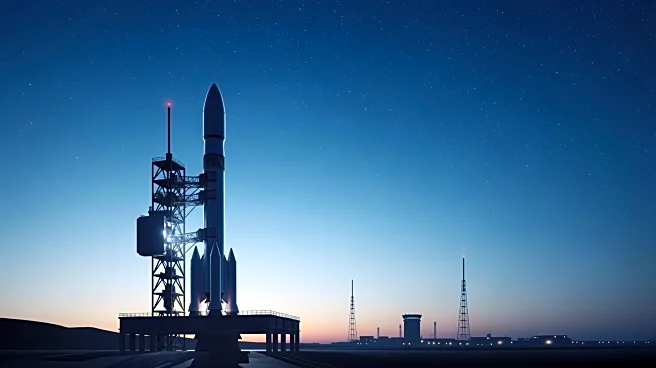
NASA's Artemis II mission has reached a critical milestone as the rocket, comprising the Space Launch System (SLS) and Orion capsule, was rolled out to Launch Pad 39B at Kennedy Space Center, Florida. This marks a significant step towards sending humans
around the moon for the first time in over 50 years. The rollout, delayed by high winds, is part of the final testing phase before the anticipated launch in early April. The mission has faced several technical challenges, including a liquid hydrogen leak and helium flow issues, which have been addressed. The four-person crew, including NASA astronauts and a Canadian Space Agency astronaut, is set to embark on a 10-day journey around the moon.
Why It's Important?
Artemis II is a pivotal test of NASA's modern deep-space systems, aiming to validate the SLS rocket and Orion spacecraft for future missions, including lunar landings and potential human missions to Mars. The mission represents a major step in NASA's goal to establish a sustainable human presence on the moon and serves as a precursor to more ambitious interplanetary exploration. Success would demonstrate the readiness of the SLS and Orion systems for deep space travel, marking a significant achievement for the U.S. space program and its international partners.
What's Next?
NASA plans to conduct a final wet dress rehearsal, involving fueling the rocket and running through a mock countdown, to ensure all systems are operational. If successful, Artemis II could launch as early as April 1, with backup windows available throughout the month. The mission's outcome will influence future Artemis program plans, including potential adjustments to commercial partnerships and mission timelines. The success of Artemis II is crucial for maintaining momentum towards NASA's long-term exploration goals.