





What's Happening?
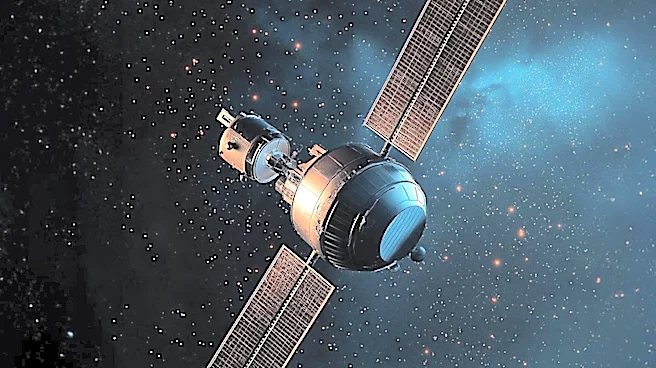
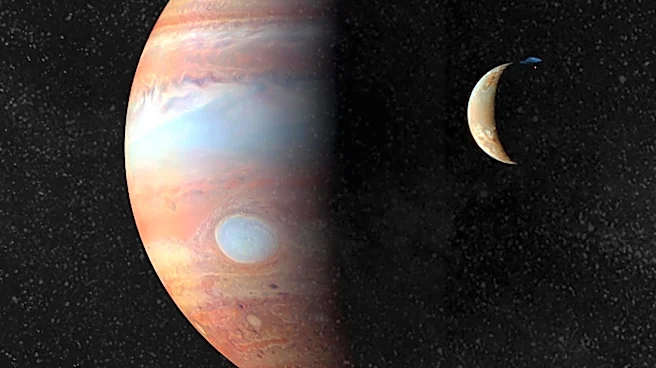
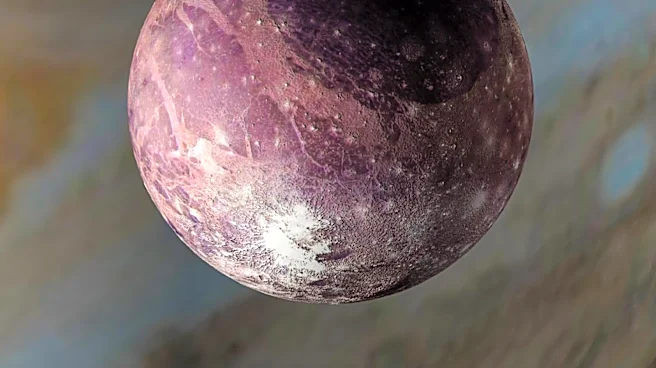
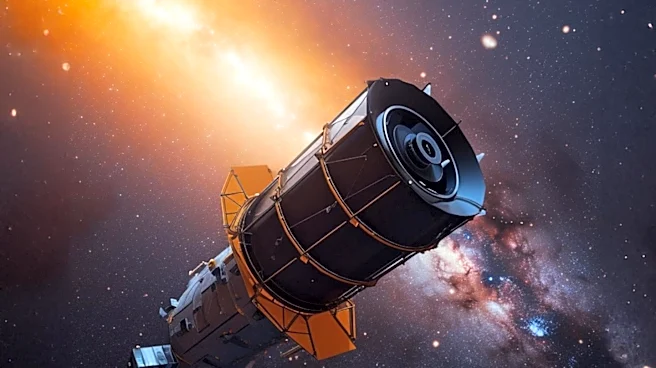
NASA's Europa Clipper is on a mission to explore Jupiter's moon Europa, which is believed to have a global ocean beneath its icy crust. The spacecraft aims to assess whether Europa could support life by detecting water plumes or warm surface pockets.
Recent research suggests that Europa's icy shell may be a more formidable barrier than previously thought, potentially preventing ocean water from reaching the surface. This finding could impact how scientists interpret data from the mission and understand Europa's habitability.
Why It's Important?
The Europa Clipper mission is significant for astrobiology and the search for extraterrestrial life. Understanding Europa's potential to support life could provide insights into the conditions necessary for life beyond Earth. The mission's findings could also inform future exploration of other icy moons and planets. The challenges posed by Europa's icy shell highlight the complexities of exploring distant celestial bodies and the need for advanced technology and innovative approaches in space exploration.
What's Next?
The Europa Clipper is scheduled to arrive at Jupiter in April 2030, with the European Space Agency's JUICE mission arriving in July 2031. These missions will provide valuable data on Europa and other ocean-bearing moons, helping scientists refine their understanding of these environments. The findings could influence future missions and strategies for exploring icy worlds in our solar system and beyond. As the missions progress, scientists will continue to analyze data and develop new models to better understand Europa's potential for life.