



What's Happening?
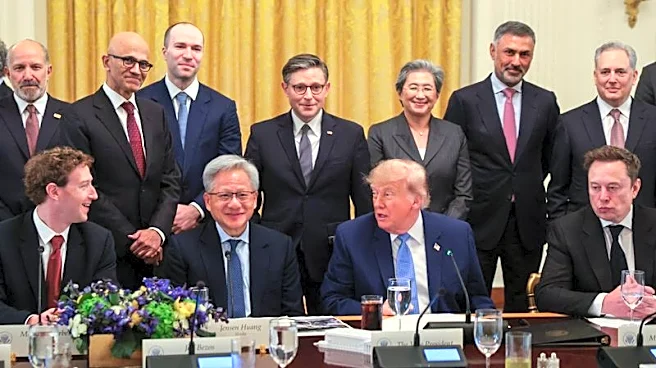
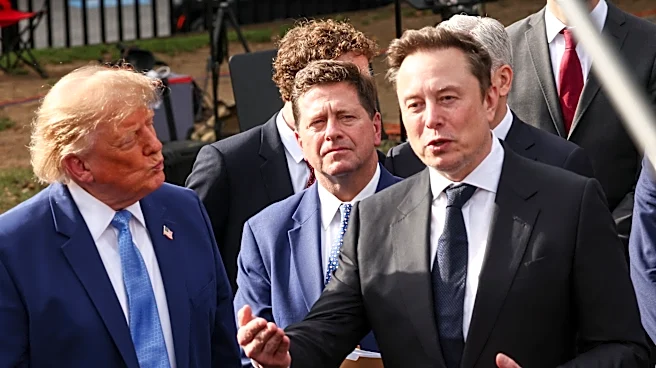
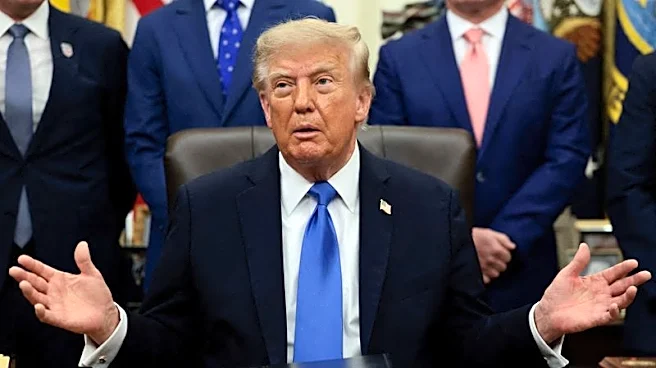
Director of National Intelligence Jay Clayton stated that 'super intelligence' is a national security issue, following a meeting between President Trump and leaders of top technology companies, including AI giants Anthropic and OpenAI, at the White House.
During an interview with CNBC's 'Squawk Box,' Clayton emphasized that the commitment to the safety and security of the American people was palpable during the meeting. He also argued against pausing the development of artificial intelligence models by U.S. companies, despite calls from some industry leaders for a slowdown due to concerns about the technology's risks. Clayton questioned the strategy of backing away from AI development within the U.S. and allowing other nations to advance in this field. He suggested that federal agencies, such as the Department of Justice and the Federal Trade Commission, are best equipped to regulate AI companies, rather than relying on the civil tort system. President Trump had previously indicated that the industry would 'self-police' and take responsibility for developing their technology safely.
Why It's Important?
Jay Clayton's declaration that 'super intelligence' is a national security issue underscores the growing recognition at the highest levels of government regarding the profound implications of advanced artificial intelligence. This statement elevates AI from a purely technological or economic concern to a matter of national defense and global power dynamics. His argument against pausing U.S. AI development highlights a strategic imperative to maintain technological leadership, fearing that a slowdown could cede an advantage to other countries. This stance reflects a competitive view of AI development on the international stage. The discussion about whether federal agencies or the civil tort system should regulate AI is crucial for establishing a clear and effective governance framework for this rapidly evolving technology. The emphasis on federal oversight suggests a move towards more centralized control, potentially impacting innovation and the operational freedom of AI companies. The meeting at the White House and President Trump's call for industry 'self-policing' indicate a desire for collaboration between government and the private sector, but also raise questions about the adequacy of self-regulation for such a powerful and potentially disruptive technology.
What's Next?
The declaration of 'super intelligence' as a national security issue will likely lead to increased government focus and investment in AI research and development, particularly in areas deemed critical for national defense. Discussions will continue regarding the optimal regulatory framework for AI, with federal agencies potentially developing new guidelines or expanding existing ones to address AI-specific risks. The debate over 'self-policing' versus stricter government oversight will persist, with industry leaders, policymakers, and civil society groups advocating for different approaches. It is probable that the U.S. will continue to prioritize its leadership in AI, potentially through strategic partnerships, funding initiatives, and talent development programs. International cooperation and competition in AI will also intensify, as other nations respond to the U.S. stance. The role of the Director of National Intelligence in shaping AI policy will become more prominent, and there may be further calls for a dedicated AI 'czar' or a similar high-level position to coordinate national AI strategy. The ethical and societal implications of advanced AI will also remain a key area of public and policy discussion.
Beyond the Headlines
Beyond the immediate policy and security implications, the framing of 'super intelligence' as a national security issue reflects a deeper societal anxiety about the future of artificial intelligence. This perspective suggests a recognition that AI could fundamentally alter geopolitical power balances, economic structures, and even human agency. The debate over pausing AI development touches upon profound ethical questions about humanity's control over increasingly intelligent machines and the potential for unintended consequences. The tension between fostering innovation and ensuring safety and security is a central theme, highlighting the complex trade-offs involved in technological advancement. Furthermore, the discussion about regulation points to the challenge of governing a technology that evolves faster than traditional legislative processes. This could lead to novel regulatory approaches, potentially involving adaptive frameworks or international agreements. The concept of 'super intelligence' itself, while still largely theoretical, forces a re-evaluation of what it means to be human and the potential for non-human intelligence to surpass human capabilities, prompting philosophical and existential considerations that extend far beyond conventional national security concerns.