


What's Happening?
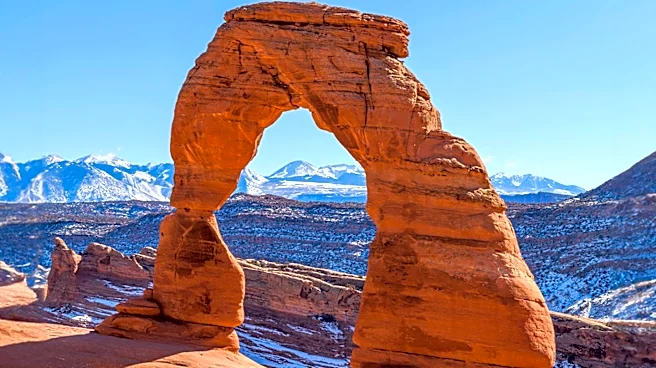
A recent Deseret News-Hinckley Institute of Politics poll, conducted by Morning Consult, indicates that Utahns hold mixed opinions regarding President Trump's 2026 decision to reduce the size of Bears Ears and Grand Staircase-Escalante National Monuments.
While 56% of registered Utah voters opposed the reduction of approximately 3 million acres from the two monuments, only 29% supported it. However, the poll also revealed a strong preference among Utahns for greater local and state control over public lands, with 82% believing local city and county governments (46%) or state governments (36%) should have the most say, compared to only 9% favoring federal control. This sentiment extends to supporting changes in federal law to require congressional approval for new national monument designations.
Why It's Important?
This poll highlights a significant tension in public land management within Utah: a desire to protect existing monument designations versus a strong inclination towards local governance. The reduction of national monuments by President Trump, enabled by the Antiquities Act, has broad implications for environmental conservation, economic development, and states' rights. The findings suggest a potential disconnect between public perception of monument protection and understanding of land use restrictions, as majorities also supported activities like livestock grazing, timber cutting, and off-road vehicle use on public lands—activities often restricted under monument designations. This complex public opinion can influence future political debates, legislative efforts, and legal challenges concerning federal land management and the scope of presidential power under the Antiquities Act.
What's Next?
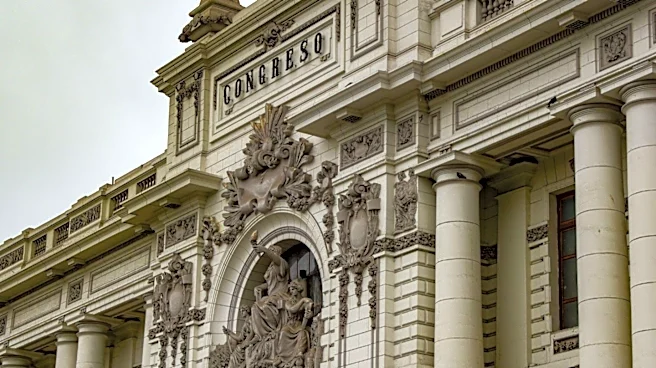
The divided public opinion in Utah could fuel ongoing political and legal battles over the future of national monuments and federal land management. Advocates for local control may push for legislative reforms to the Antiquities Act, potentially requiring greater congressional oversight or state consent for monument designations. Conversely, conservation groups are likely to continue advocating for the restoration and protection of these lands. The poll results may also influence how future presidential administrations approach monument designations and reductions, potentially leading to more cautious or politically calculated decisions. The debate will likely continue to center on balancing conservation efforts with local economic interests and the principle of federal versus state/local authority over vast tracts of public land.
Beyond the Headlines
The nuanced results of the Utah poll reveal a deeper philosophical debate about the role of federal government in land stewardship versus the principles of local self-determination. The Antiquities Act, originally intended to protect historical artifacts, has evolved to encompass vast natural landscapes, leading to ongoing controversy. The poll suggests that many citizens may not fully grasp the specific land use implications of national monument status, often conflating them with national parks. This lack of clarity can be exploited in political discourse, making it challenging to forge consensus on land management policies. The issue also touches upon the economic livelihoods of rural communities, who often feel disconnected from federal decision-making processes, highlighting the need for more inclusive and transparent dialogue in public land policy.