
What's Happening?
An extensive archaeological excavation is underway at Notre Dame Cathedral's forecourt in Paris, following the reconstruction of the cathedral after the 2019 fire. The project aims to transform the area
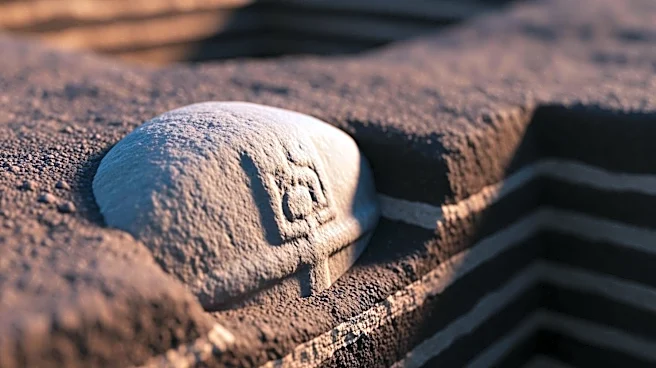
into a shaded square with trees, but first requires a thorough excavation to preserve historical artifacts. The dig, described by French media as the 'dig of the century,' has unearthed a variety of historical objects, including a 4th-century coin featuring Emperor Constantine and medieval pottery with undeciphered markings. The excavation has revealed layers of history, from medieval cellars to Merovingian and Carolingian grain pits, and even a Roman quarter dating back to the fourth and fifth centuries. The site has yielded intact jugs and cups from old latrines, preserved by the soft waste that cushioned them over the centuries.
Why It's Important?
This excavation is significant as it provides a unique glimpse into the historical layers of Paris, offering insights into the city's development over the centuries. The findings contribute to the understanding of Paris's urban and cultural history, revealing the evolution of the area from Roman times through the medieval period. The project also highlights the challenges of urban development in historically rich cities, where modern infrastructure projects must balance progress with preservation. The transformation of the Notre Dame forecourt into a shaded area is part of Paris's broader efforts to adapt to climate change, aiming to provide relief from increasingly hot summers. This initiative reflects a growing trend in urban planning that prioritizes sustainability and historical preservation.
What's Next?
The excavation is expected to continue as the team delves deeper into the historical layers beneath Notre Dame's forecourt. The project is scheduled to be completed by 2028, with the new square featuring 160 trees and a water feature to cool the area. As the excavation progresses, more artifacts are likely to be discovered, potentially offering further insights into Paris's past. The findings may influence future archaeological practices and urban planning strategies in other historically significant cities. The project also sets a precedent for how cities can integrate historical preservation with modern development, potentially inspiring similar initiatives worldwide.