

What's Happening?
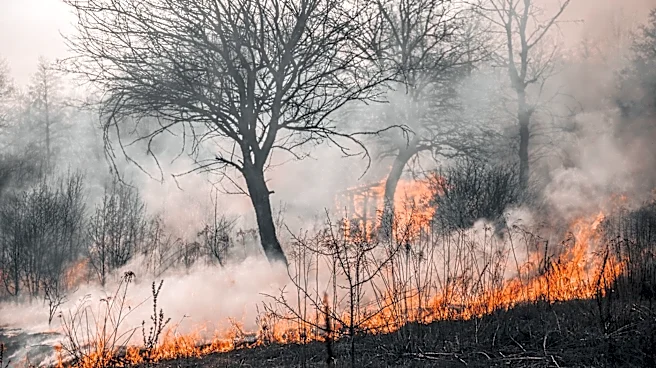
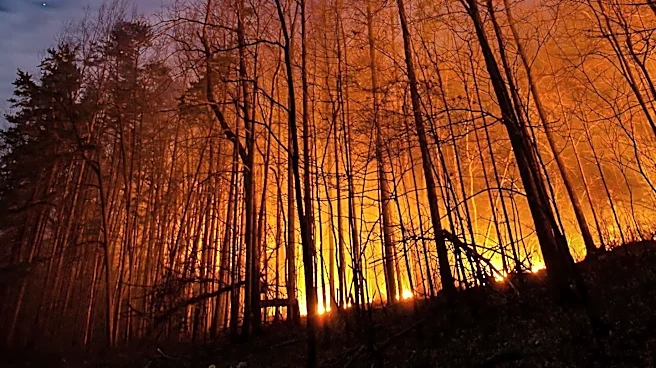
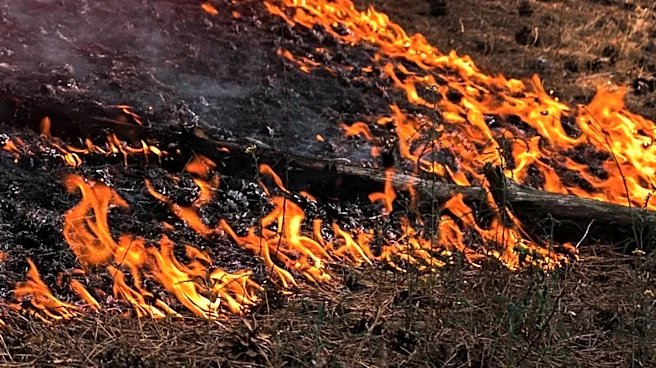
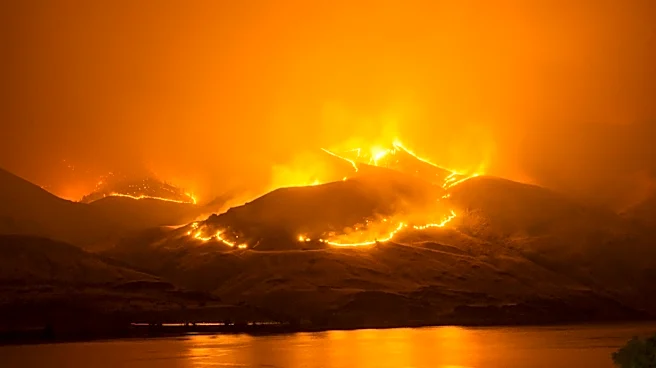
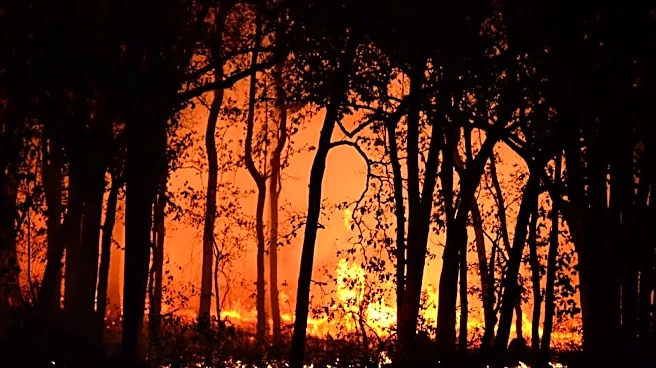
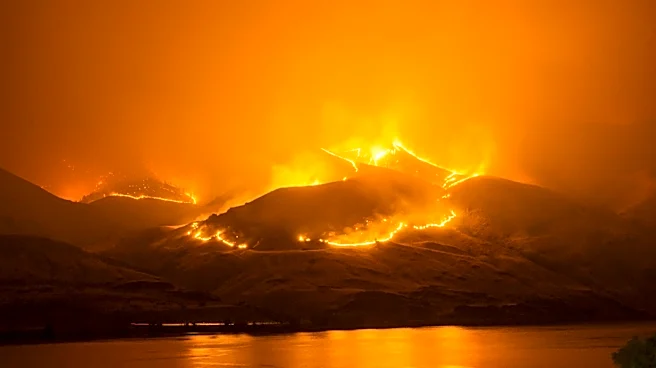
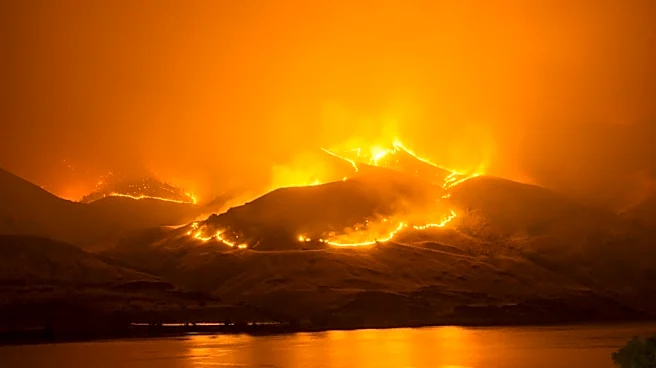
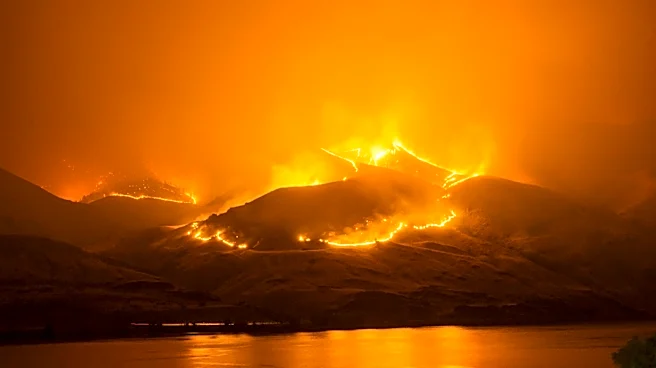
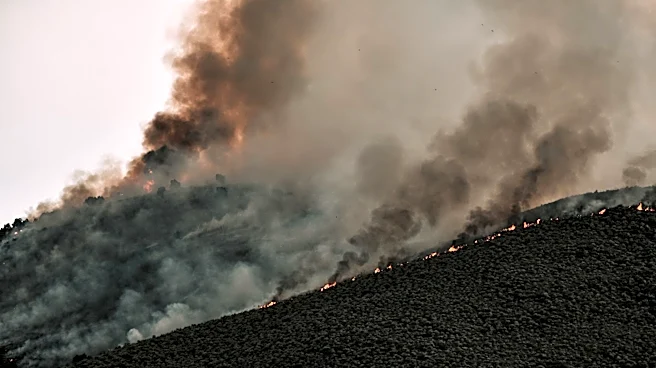
The Pacific Northwest is experiencing a historic wildfire season, with nearly 2 million acres already burned. The situation is expected to worsen as a dry cold front brings powerful winds, increasing the risk of explosive fire growth. According to the National
Interagency Fire Center, over 50 large wildfires are currently active across Washington, Oregon, Idaho, and Montana. These fires have significantly degraded air quality, prompting Air Quality Alerts in the region. The dry cold front is expected to lower humidity and bring strong winds, creating conditions conducive to rapid wildfire spread. Fire Weather Watches have been issued, with the most dangerous conditions anticipated in central and eastern Washington and north-central Oregon.
Why It's Important?
The escalating wildfire situation in the Pacific Northwest poses significant risks to communities, infrastructure, and the environment. The fires threaten homes and critical infrastructure, requiring extensive firefighting resources and potentially leading to evacuations. The degraded air quality poses health risks to residents, particularly those with respiratory conditions. The economic impact is also substantial, with potential losses in property, tourism, and increased firefighting costs. The situation underscores the challenges of managing natural disasters exacerbated by climate conditions, highlighting the need for effective disaster preparedness and response strategies.
What's Next?
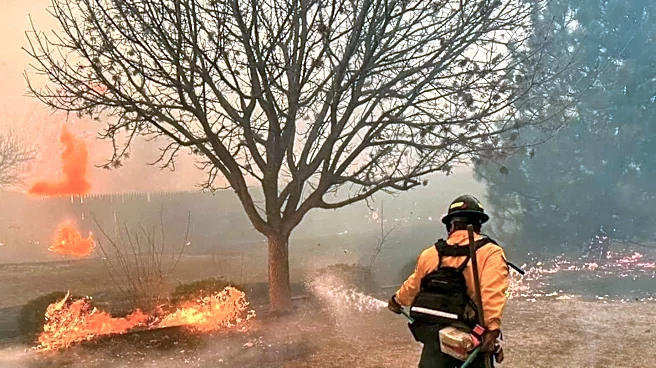
As the dry cold front moves through the region, the risk of new fires and the spread of existing ones remains high. Firefighters are on high alert, and residents in affected areas are advised to prepare for possible evacuations. The National Weather Service has issued a Particularly Dangerous Situation Fire Weather Warning, indicating the severity of the conditions. Continued monitoring and response efforts will be crucial in managing the situation and minimizing damage. The focus will be on containing existing fires and preventing new ones from starting, with resources being allocated to the most critical areas.