





What's Happening?
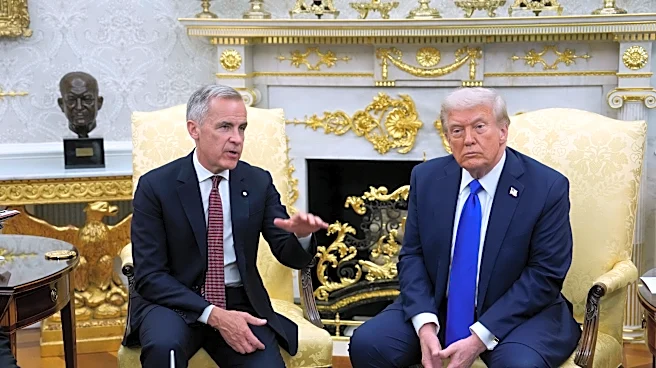
The Trump administration has announced that it is making progress towards a trade deal with Canada. This development comes as both nations are working to alleviate existing tariff tensions. The statement from the administration highlights ongoing efforts
to resolve trade disputes and foster a more favorable economic relationship between the U.S. and Canada. Concurrently, the administration's negotiations with Iran are reported to be stalled. This contrast indicates a bifurcated approach in U.S. foreign policy, with active engagement in North American trade discussions while facing impasses in diplomatic efforts concerning Iran. The focus on a trade agreement with Canada suggests a prioritization of regional economic stability and resolution of immediate trade disagreements.
Why It's Important?
The progress towards a trade deal with Canada is significant for the U.S. economy, particularly for industries heavily reliant on cross-border trade. A successful agreement could lead to reduced tariffs, increased market access, and greater predictability for businesses operating in both countries. This would benefit American manufacturers, agricultural producers, and consumers by potentially lowering costs and expanding choices. Conversely, the stalled negotiations with Iran carry substantial geopolitical and economic implications. Continued tensions could impact global oil markets, create instability in the Middle East, and potentially lead to further sanctions, affecting U.S. companies with international operations. The differing trajectories of these two diplomatic efforts underscore the complex and varied challenges facing U.S. foreign policy and its economic interests.
What's Next?
The next steps will likely involve continued negotiations between the U.S. and Canada to finalize the details of the trade agreement. This process will entail addressing remaining points of contention and securing mutual concessions to reach a comprehensive deal. For Iran, the path forward is less clear, with the current stalemate suggesting a prolonged period of diplomatic inactivity or potential escalation of tensions. Stakeholders, including U.S. businesses and international allies, will be closely monitoring both situations. The outcome of the Canadian trade talks could set a precedent for future U.S. trade relations, while the ongoing situation with Iran will continue to be a critical factor in global security and energy markets.
Beyond the Headlines
Beyond the immediate economic and political implications, the contrasting developments with Canada and Iran highlight the broader strategic priorities of the Trump administration. The emphasis on resolving trade issues with a key North American partner like Canada reflects a 'America First' approach that seeks to rebalance trade relationships closer to home. In contrast, the stalled Iran negotiations point to a more confrontational stance on issues deemed critical to national security, even if it means prolonged diplomatic impasses. This dual approach reveals a foreign policy that is both pragmatic in its regional economic dealings and assertive in its global security posture, potentially reshaping alliances and trade dynamics on a larger scale.