






What's Happening?
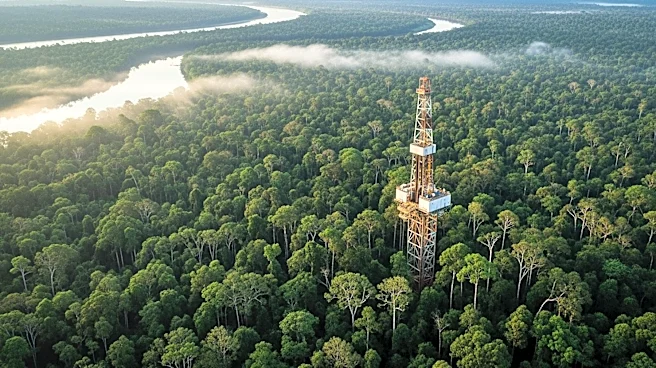
Petrobras, Brazil's state-run oil company, has initiated offshore drilling operations near the mouth of the Amazon River, sparking a wave of economic optimism in the region. The drilling, which began in October, is part of an exploratory effort to assess
the potential for large oil reserves. This development has led to a significant influx of migrants to the city of Oiapoque in Brazil's northern state of Amapa, as residents anticipate job opportunities and economic growth. However, the drilling has also raised environmental concerns, particularly regarding the impact on local ecosystems and Indigenous communities. Environmental and Indigenous groups have filed lawsuits against Petrobras and the Brazilian government, challenging the licensing process and highlighting the risks of oil spills and climate impacts. The situation underscores the broader dilemma faced by developing countries in balancing economic development with environmental protection.
Why It's Important?
The drilling operations by Petrobras have the potential to transform the local economy in Amapa, one of Brazil's poorest states, by creating jobs and generating revenue. However, this economic promise comes with significant environmental risks, including potential oil spills that could devastate the Amazon's delicate ecosystems. The controversy also puts pressure on President Luiz Inácio Lula da Silva's administration, which has committed to environmental protection and reducing deforestation. The situation highlights the challenges faced by developing countries in leveraging natural resources for economic growth while mitigating environmental damage. The outcome of this conflict could set a precedent for future resource extraction projects in Brazil and other developing nations.
What's Next?
The next steps involve the continuation of Petrobras' exploratory drilling, which is expected to last five months. If significant oil reserves are discovered, further government permits will be required for extraction, a process that could take months or years. Meanwhile, legal challenges from environmental and Indigenous groups are ongoing, with federal prosecutors seeking to annul or suspend the environmental license granted to Petrobras. The resolution of these legal disputes will be crucial in determining the future of oil extraction in the region. Additionally, the local government and community leaders will need to address the rapid population growth and infrastructure challenges in Oiapoque, as the city struggles to accommodate the influx of migrants.
Beyond the Headlines
Beyond the immediate economic and environmental implications, the situation in Oiapoque reflects broader issues of urban planning and social equity. The rapid population growth has led to unplanned urban expansion, with new settlements lacking basic infrastructure such as sewage systems and structured streets. This unregulated development poses long-term challenges for the city, including overcrowded schools and healthcare facilities. The situation also raises ethical questions about the rights of Indigenous communities and their ability to protect their lands and way of life from industrial encroachment. The conflict between economic development and environmental conservation in Oiapoque could influence future policy decisions in Brazil and other countries facing similar dilemmas.