



What's Happening?
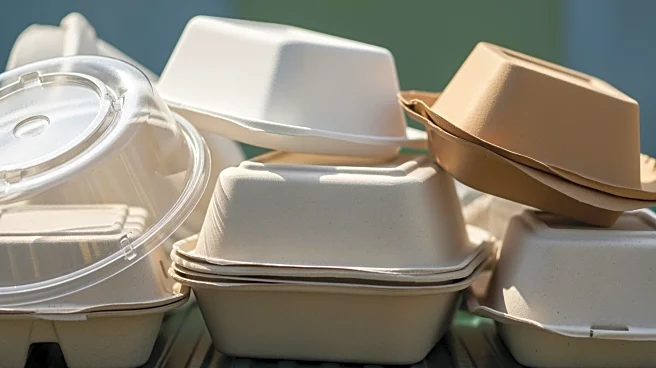
Recycling takeout containers is more complex than it appears, as many items commonly thought to be recyclable are not. Jeremy Walters, a sustainability ambassador for Republic Services, explains that 'wish-cycling'—the practice of tossing items into recycling
bins without certainty of their recyclability—undermines recycling systems. Walters identifies several takeout containers that are typically non-recyclable, including Styrofoam containers, black plastic containers, and oil-stained pizza boxes. These items often end up in landfills due to contamination or material limitations. Walters advises consumers to research local recycling guidelines and ensure containers are clean before recycling. He also suggests opting for reusable or biodegradable alternatives when possible.
Why It's Important?
The improper recycling of takeout containers poses significant challenges to waste management systems. Non-recyclable materials can contaminate recycling streams, leading to increased processing costs and reduced efficiency. This issue highlights the need for better consumer education on recycling practices and the importance of clear labeling by manufacturers. The environmental impact is substantial, as non-recyclable waste contributes to landfill overflow and pollution. By understanding which materials can be recycled, consumers can help improve recycling rates and reduce environmental harm. This knowledge is crucial for municipalities aiming to enhance their waste management strategies and for businesses seeking to adopt more sustainable practices.
What's Next?
Efforts to improve recycling practices may include increased public awareness campaigns and stricter regulations on labeling recyclable materials. Municipalities might expand composting programs to handle food-soiled paper products, as seen in cities like Austin, Texas. Businesses could be encouraged to switch to eco-friendly packaging options, potentially driven by consumer demand for sustainable practices. Additionally, advancements in recycling technology could improve the ability to process currently non-recyclable materials. Stakeholders, including local governments, recycling companies, and consumers, will need to collaborate to address these challenges effectively.
Beyond the Headlines
The issue of non-recyclable takeout containers also raises questions about consumer responsibility and corporate accountability. As consumers become more environmentally conscious, there is growing pressure on businesses to adopt sustainable packaging solutions. This shift could lead to innovation in packaging materials and design, potentially reducing the environmental footprint of the food service industry. Furthermore, the conversation around recycling highlights broader societal challenges related to waste management and environmental sustainability, prompting discussions on policy changes and technological advancements.