
What's Happening?
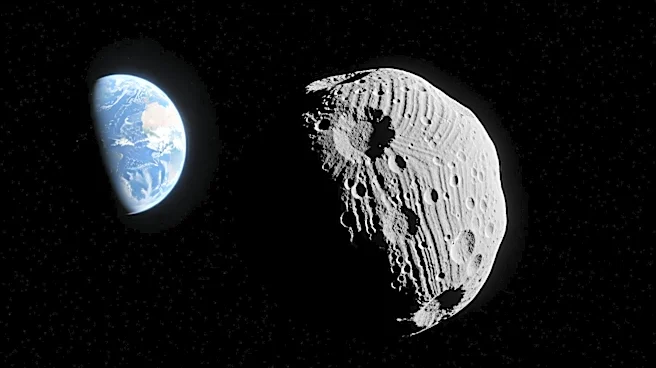
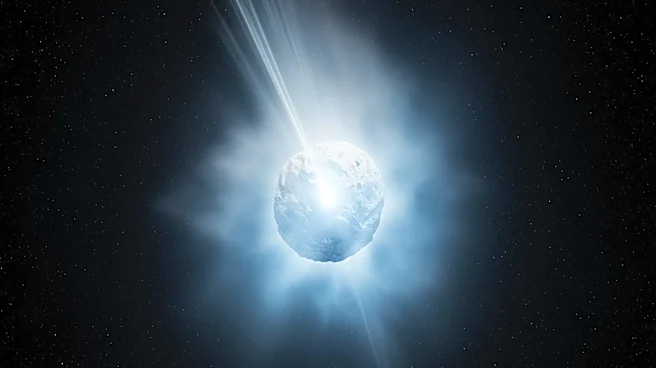
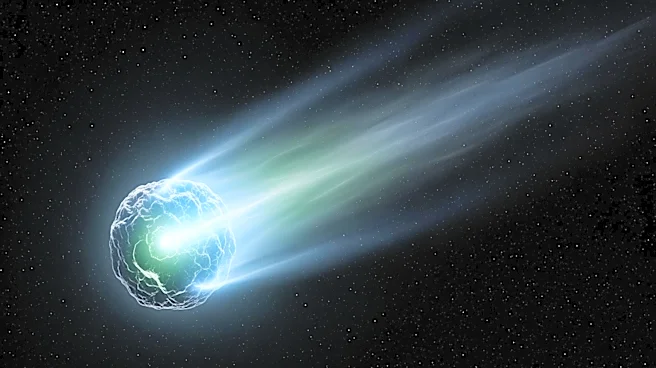
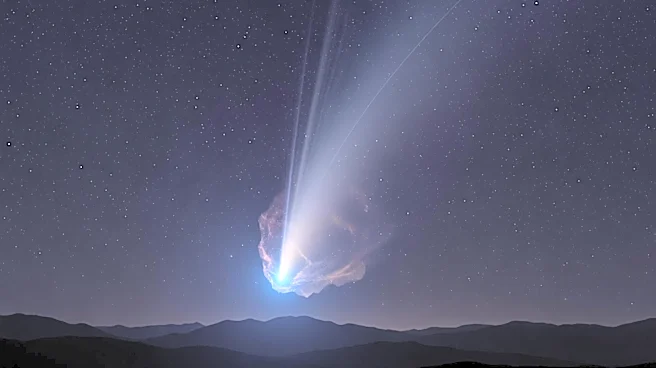
The Hubble Telescope has captured a new image of the interstellar comet 3I/ATLAS, which is releasing significant amounts of water into space. Discovered in 2025, the comet is located approximately 420 million miles from Earth and poses no threat to the planet.
Observations by the European Space Agency have detected infrared emissions from water vapor and carbon dioxide molecules, with the comet expelling water vapor at an estimated rate of two tons per second. This comet is only the third of its kind ever observed, providing valuable insights into the formation of worlds beyond our galaxy.
Why It's Important?
The discovery of comet 3I/ATLAS and its significant water emissions is crucial for understanding the formation of celestial bodies beyond our solar system. The data collected from this comet can offer insights into the composition and behavior of interstellar objects, which are fundamentally different from those within our solar system. This information is vital for astronomers and scientists as it helps to expand our knowledge of the universe and the processes that govern the formation of planets and other celestial bodies. The findings could potentially influence future space exploration missions and the search for extraterrestrial life.
What's Next?
As observations continue, scientists will likely gather more data on comet 3I/ATLAS, enhancing our understanding of interstellar objects. The ongoing analysis may lead to new discoveries about the comet's composition and behavior, contributing to the broader field of astronomy. Future missions may focus on similar interstellar objects to further explore their characteristics and origins. The scientific community will be keenly observing any new developments or findings that emerge from continued study of this rare comet.