






What's Happening?
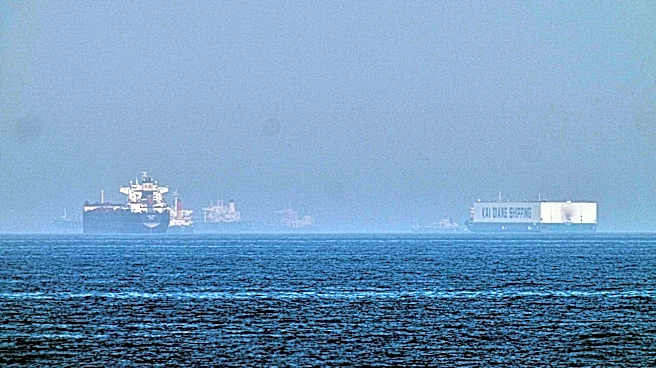
Iran's Revolutionary Guard has issued a warning to the United States, stating that any attack on Iranian oil tankers or commercial vessels will result in a 'heavy assault' on U.S. bases and enemy ships in the region. This warning comes as a fragile ceasefire
between the U.S. and Iran appears to be holding, despite recent U.S. strikes on Iranian oil tankers. The U.S. military claims these tankers were attempting to breach a blockade of Iran's ports. Meanwhile, Bahrain has arrested individuals allegedly linked to Iran's Revolutionary Guard, accusing them of collecting funds to support Iran's operations. The situation remains tense as the U.S. awaits Iran's response to a proposal aimed at ending the conflict, reopening the Strait of Hormuz, and addressing Iran's nuclear program.
Why It's Important?
The ongoing tensions in the Gulf region have significant implications for global energy markets and geopolitical stability. The Strait of Hormuz is a critical chokepoint for global oil supplies, and any disruption could lead to increased oil prices and economic instability. The U.S. and its allies are concerned about Iran's influence in the region and its nuclear ambitions. The fragile ceasefire and ongoing diplomatic efforts highlight the delicate balance of power and the potential for escalation. The involvement of other nations, such as Russia and European countries, underscores the international dimension of the conflict and the need for a coordinated response to ensure regional security and stability.
What's Next?
Diplomatic efforts are ongoing, with countries like Pakistan and Russia engaging in talks to extend the ceasefire and reach a peace agreement. The U.S. has reiterated its willingness to resume military actions if Iran does not comply with the proposed terms. The deployment of British and French naval forces to the region indicates a readiness to protect commercial shipping lanes once a sustainable ceasefire is achieved. The international community is closely monitoring the situation, with potential implications for global energy markets and regional security dynamics.
Beyond the Headlines
The conflict in the Gulf region raises broader questions about the balance of power in the Middle East and the role of external powers in regional conflicts. The situation also highlights the challenges of enforcing international agreements and the complexities of nuclear diplomacy. The involvement of multiple stakeholders, including regional powers and international organizations, reflects the interconnected nature of global security issues and the need for comprehensive solutions that address the underlying causes of conflict.