



What's Happening?
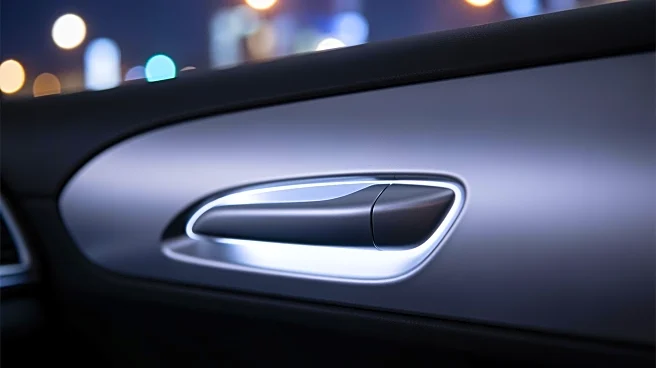
China has announced a ban on hidden car door handles, a feature popularized by Tesla, due to safety concerns. The new regulation, set to take effect on January 1, 2027, requires all cars sold in China to have a mechanical release feature for both interior
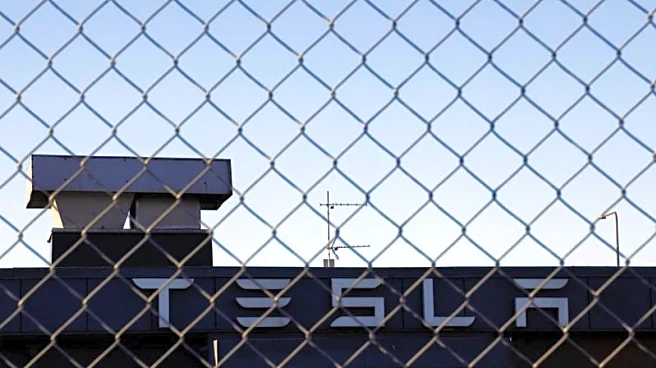
and exterior door handles. This decision follows reports of accidents where passengers were trapped in vehicles because rescuers could not open the doors. The Ministry of Industry and Information Technology cited the inconvenience and safety risks associated with these handles, which sit flush against the car's body and require pressing to release. Tesla, along with other electric vehicle manufacturers like Xiaomi and Aion, have adopted this design. The regulation does not target any specific company but aims to enhance safety by ensuring door handles are operable from any angle and visible from the occupant's position.
Why It's Important?
The ban on hidden door handles in China highlights significant safety concerns associated with modern vehicle designs. This move could impact Tesla and other manufacturers who have integrated such features into their vehicles, potentially leading to redesigns and increased production costs. For Tesla, China is a crucial market, and compliance with these new regulations is essential to maintain its market position. The decision also underscores the growing scrutiny on vehicle safety features, which could influence global automotive standards and regulations. Manufacturers may need to reassess their designs to prioritize safety, potentially affecting innovation and consumer preferences in the electric vehicle market.
What's Next?
As the new regulations are set to be implemented in 2027, car manufacturers, including Tesla, Xiaomi, and Aion, will need to redesign their vehicles to comply with the mechanical release requirements. This may involve significant changes to production processes and design strategies. The automotive industry will likely monitor the situation closely, as similar safety concerns could prompt regulatory changes in other countries. Companies may also invest in developing new technologies that balance innovative design with enhanced safety features. Stakeholders, including safety advocates and consumer groups, may push for broader adoption of such regulations to prevent similar incidents globally.