





What's Happening?
U.S. Senator Kyrsten Sinema, representing Arizona, has played a key role in securing congressionally directed spending for a thinning project in the Grand Canyon National Park. This project, totaling $816,779, is aimed at fire management and fuels reduction
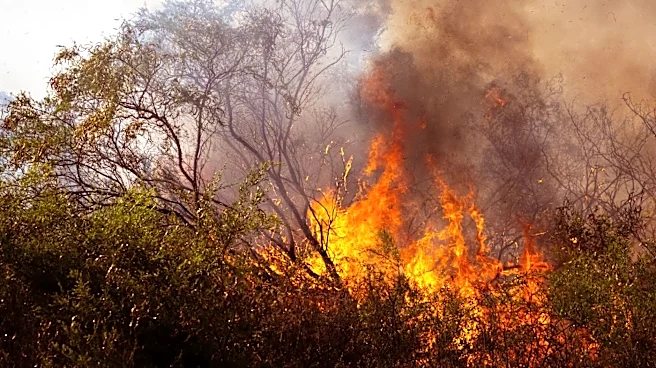
activities. The funding was secured by Senator Sinema alongside Senator Mark Kelly. The initiative is part of broader efforts to manage the park's natural resources and protect its historic properties. The Grand Canyon National Park is also seeking public input on rules related to historic properties and fire management, indicating a comprehensive approach to conservation and safety within the park. These activities include prescribed burns and other fuels reduction projects, which are crucial for maintaining the ecological health of the area and mitigating wildfire risks.
Why It's Important?
The funding secured by Senator Sinema for the Grand Canyon National Park's thinning project is important for several reasons. Firstly, it directly addresses the critical issue of wildfire management in a significant national park, protecting both natural ecosystems and visitor safety. Wildfires can have devastating long-term environmental and economic impacts, and proactive measures like thinning projects are essential for prevention. Secondly, the involvement of a U.S. Senator highlights the federal government's commitment to preserving national treasures and investing in their ecological health. This funding also supports local economies through the implementation of these projects, creating jobs and requiring resources. The emphasis on public input for historic property rules and fire management plans underscores a collaborative approach to conservation, ensuring that diverse perspectives are considered in the park's future management. This initiative sets a precedent for how federal funding can be leveraged for environmental protection and sustainable land management.
What's Next?
The thinning project in the Grand Canyon National Park, funded by the congressionally directed spending secured by Senator Sinema, is now underway. The park will continue to implement planned fire management activities, including prescribed burns and fuels reduction projects, as outlined in the draft agreement. Public input on rules for historic properties and fire management will likely continue to be a part of the process, shaping the long-term strategies for the park's conservation. Future legislative efforts may build upon this precedent, with other national parks potentially seeking similar funding for environmental protection and resource management. The success of this project could influence future policy decisions regarding federal funding for national park maintenance and wildfire prevention across the country. Stakeholders, including environmental groups, local communities, and park visitors, will be closely observing the outcomes of these initiatives.
Beyond the Headlines
Beyond the immediate impact of fire prevention, the thinning project in the Grand Canyon National Park touches upon deeper ecological and cultural implications. The proactive management of forest fuels is vital for maintaining biodiversity and the natural balance of the ecosystem, which has been disrupted by historical fire suppression policies. This project also highlights the ongoing challenge of balancing conservation efforts with the increasing threat of climate change, which can exacerbate wildfire risks. Furthermore, the focus on historic properties within the park underscores the cultural significance of these lands, not just as natural wonders but as sites of historical and indigenous heritage. The collaborative approach involving public input reflects a growing recognition of the need for inclusive decision-making in land management, ensuring that the voices of various communities are heard in shaping the future of national parks. This initiative serves as a model for integrated conservation strategies that consider both ecological health and cultural preservation.