






What's Happening?
President Donald Trump has declared that Iran is 'FINISHED' following recent Israeli strikes against Hezbollah targets in Lebanon. This statement comes amid reports that the Strait of Hormuz, a critical maritime passage, has been closed again. The closure
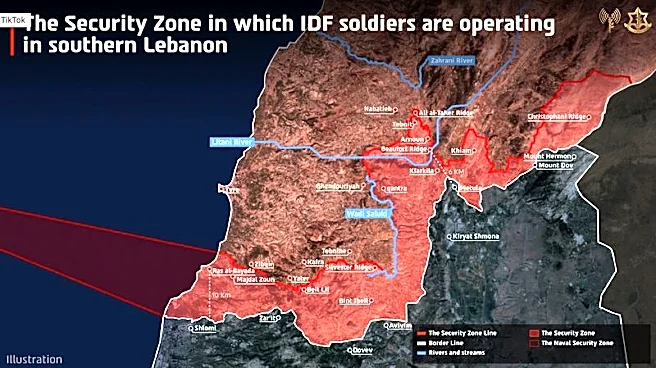
is reportedly linked to a memorandum of understanding (MOU) between the U.S. and Iran, which stipulates that Iran will not receive any benefits if it reneges on the agreement within 60 days. The situation is further complicated by conflicting reports about the status of the Strait, with Iranian officials denying its closure. The strikes by Israel, which reportedly targeted over 80 Hezbollah sites, have led to a ceasefire brokered by U.S. and Qatari negotiators, although neither Israel nor Hezbollah has confirmed this truce.
Why It's Important?
The potential closure of the Strait of Hormuz is significant as it is a vital route for global oil shipments, and its closure could disrupt international oil markets and increase tensions in the Middle East. President Trump's declaration and the ongoing conflict between Israel and Hezbollah could further strain U.S.-Iran relations and impact regional stability. The MOU's conditions, particularly regarding Israel's withdrawal from Lebanon, highlight the complex geopolitical dynamics at play. The situation underscores the fragile nature of peace agreements in the region and the potential for escalation if diplomatic solutions are not reached.
What's Next?
The next steps involve monitoring the situation in the Strait of Hormuz and the implementation of the ceasefire between Israel and Hezbollah. The U.S. and its allies may need to engage in further diplomatic efforts to ensure compliance with the MOU and prevent further escalation. The international community will likely watch closely for any changes in Iran's military posture or further retaliatory actions. Additionally, the U.S. administration may face domestic and international pressure to clarify its stance and actions regarding the MOU and its implications for regional security.