


What's Happening?
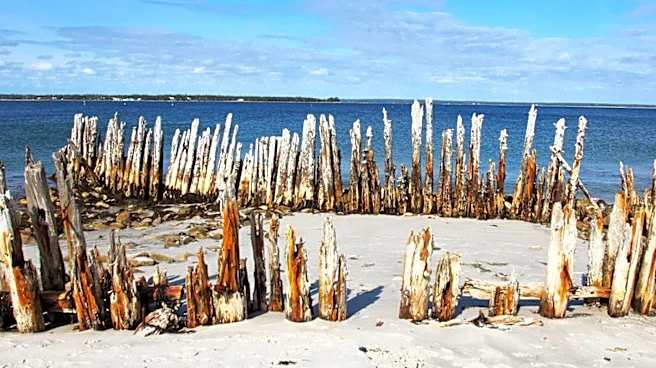
Cumberland Island, a barrier island located off the coast of St. Marys, is being highlighted for its wild and untamed nature, alongside its rich and complex history. The island's past includes a significant period where plantation owners developed the land, relying
on enslaved people whose labor shaped the island's economy and culture. Archaeological findings, including traces of enslaved communities, continue to provide crucial insights into this era. The Civil War brought substantial changes, with Union forces occupying the island in 1862, leading to the flight of plantation owners and the departure of most enslaved African Americans. Post-war, some formerly enslaved individuals returned, establishing new lives as subsistence farmers. Efforts to redistribute confiscated land to these families were short-lived, with many properties reverting to pre-war owners. Despite this, African American families established a lasting community known as The Settlement on the island's north end.
Why It's Important?
The exploration of Cumberland Island's history is important for understanding the enduring legacy of slavery and its impact on American society and land ownership. The narrative of the island, from its plantation economy built on enslaved labor to the post-Civil War struggles and the establishment of The Settlement, offers a microcosm of broader U.S. historical themes. It underscores the complex interplay of economic development, racial injustice, and the resilience of communities in the face of systemic challenges. The short-lived efforts to redistribute land to formerly enslaved families highlight the historical failures in addressing economic disparities and land rights post-emancipation, issues that continue to resonate in contemporary discussions about reparations and social justice. The island serves as a tangible reminder of how historical events have shaped demographic patterns and cultural landscapes in the U.S.
What's Next?
Further archaeological research and historical preservation efforts on Cumberland Island are likely to continue, aiming to uncover more details about its past, particularly regarding the lives and contributions of enslaved and formerly enslaved communities. Educational initiatives and interpretive programs will likely be developed or expanded to share these stories with the public, ensuring a more comprehensive understanding of American history. There may also be ongoing discussions about how to best honor the legacy of all inhabitants of the island, including those whose histories have been marginalized. The continued designation of Cumberland Island as a wild and untamed natural space also suggests a focus on balancing historical interpretation with environmental conservation, ensuring its unique character is preserved for future generations while its stories are told.
Beyond the Headlines
Beyond the immediate historical facts, Cumberland Island's story touches upon deeper ethical and cultural dimensions. The term 'untamed' not only describes its natural state but can also metaphorically represent the untamed spirit of those who endured slavery and later forged new lives. The island's history prompts reflection on the concept of 'ownership' – both of land and of human beings – and how these concepts have evolved and been contested throughout American history. It also highlights the ongoing challenge of reconciling a painful past with the present, and how natural landscapes can serve as powerful, silent witnesses to human struggles and triumphs. The preservation of sites like The Settlement is crucial for maintaining cultural memory and fostering a more complete national identity, acknowledging all chapters, even the most difficult ones.