
What's Happening?
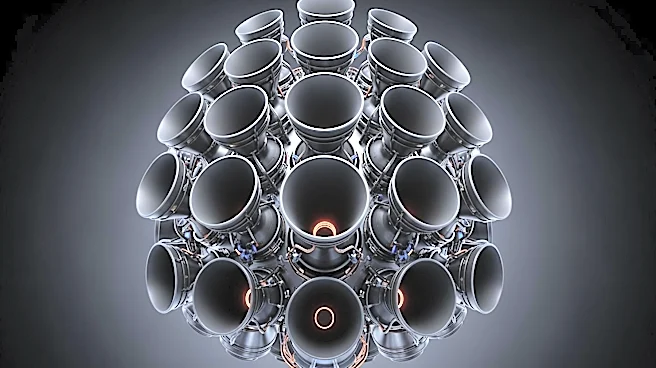
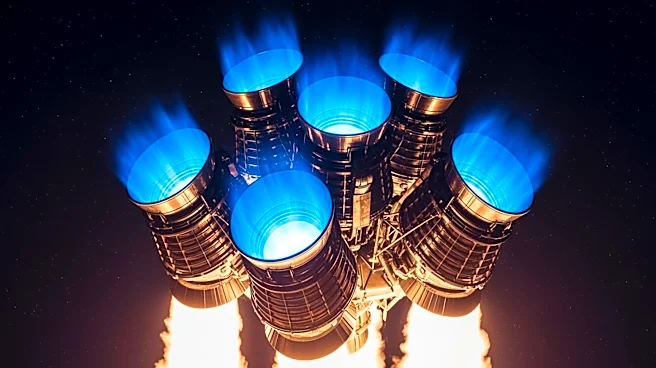
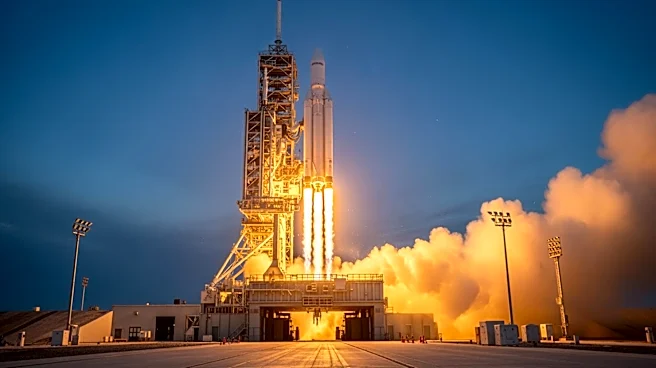
SpaceX has achieved a significant milestone in its space exploration efforts by successfully conducting a full static-fire test of its Super Heavy V3 booster. This test involved firing all 33 Raptor engines
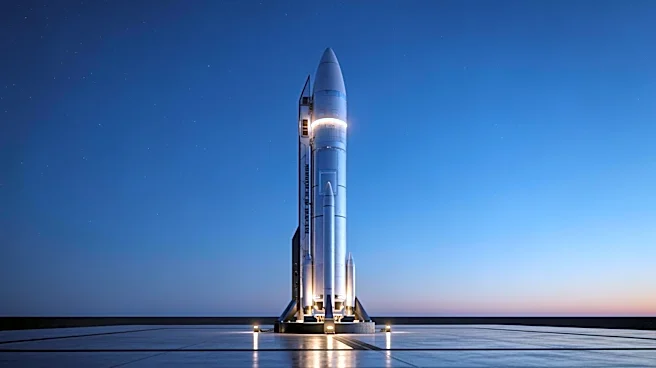
at full thrust and duration, marking a crucial step towards the company's goal of launching the most powerful rocket in history. The test took place at SpaceX's Starbase facility in Texas and is part of the preparations for a potential May 15 launch. The Starship system, which includes the Super Heavy booster and the Starship upper stage, is designed for long-duration space travel and is central to NASA's Artemis program. This program aims to return astronauts to the Moon and eventually send them to Mars. The successful test indicates that SpaceX is moving closer to refining the Starship system for future interplanetary travel.
Why It's Important?
The successful test of the Super Heavy V3 booster is a pivotal development in the field of space exploration. SpaceX's Starship system is designed to be fully reusable, which could drastically reduce the cost of space travel and make it more accessible. This reusability is crucial for long-term missions, such as those to Mars, as it allows for in-space refueling and extended missions beyond Earth. The Starship's capacity to carry over 100 tons of cargo into low Earth orbit makes it a key component of NASA's Artemis program, which seeks to establish a sustainable human presence on the Moon and prepare for future missions to Mars. The success of this test not only advances SpaceX's goals but also supports NASA's deep-space exploration objectives, potentially transforming the future of human space travel.
What's Next?
Following the successful static-fire test, SpaceX is targeting May 15 for the 12th test flight of the Starship, which will be a suborbital mission aimed at further refining the vehicle's capabilities. This test will be the first major trial for the newly designed V3 booster. If successful, it will pave the way for future orbital launches and missions to the Moon and Mars. However, before crewed missions can occur, the vehicle must be equipped with a life-support system, and SpaceX must demonstrate that Starship can reach orbit and perform in-space refueling. These steps are essential for the vehicle's use in deep-space missions, aligning with SpaceX's broader goal of making space travel more sustainable and accessible.