






What's Happening?
Researchers from the Australian Museum Research Institute have uncovered a remarkable collection of fossils at McGraths Flat, located in the central tablelands of New South Wales, Australia. This site, dating back to the Miocene epoch between 11 million
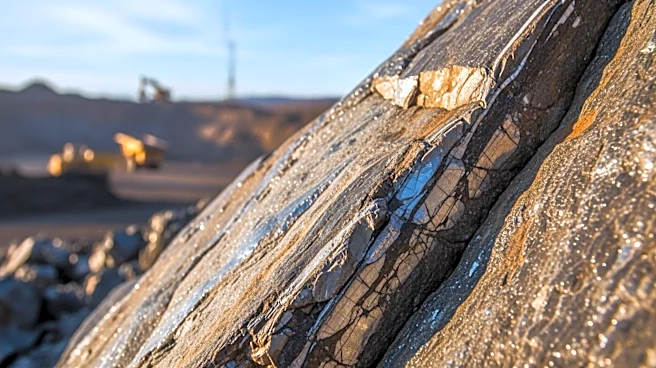
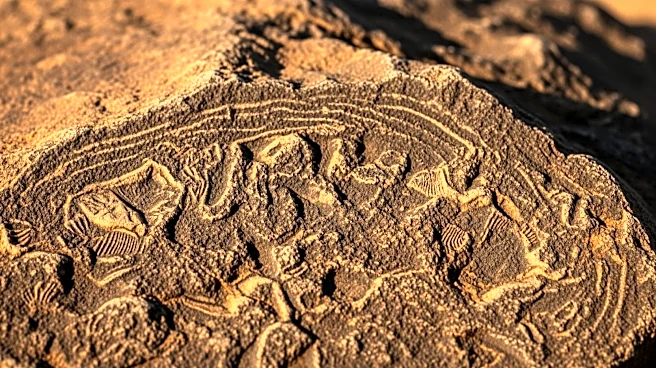
and 16 million years ago, was once a thriving rainforest. The fossils, preserved in iron-rich rocks known as ferricrete, include plants, insects, spiders, fish, and even feathers, offering a detailed glimpse into the ancient ecosystem. The study, published in the journal Gondwana Research, challenges traditional assumptions about fossil preservation, as iron-rich rocks have not typically been associated with well-preserved fossils, especially those of terrestrial plants and animals.
Why It's Important?
The discovery at McGraths Flat is significant as it expands the understanding of fossil preservation beyond traditional rocks like shale and sandstone. The site provides insights into ancient terrestrial ecosystems, capturing soft tissues with remarkable clarity. This challenges the long-standing belief that iron-rich rocks are unsuitable for preserving such details. The findings could lead to new methods for identifying similar fossil sites globally, potentially revolutionizing the study of ancient life. The preservation of soft tissues, such as pigment cells and nerve structures, offers unprecedented opportunities for paleontologists to study the biology and ecology of ancient species.
What's Next?
The study suggests that future fossil discoveries may come from iron-rich deposits rather than traditional fossil-bearing rocks. Researchers are encouraged to explore areas with fine-grained, layered ferricrete, particularly where ancient river channels intersect iron-rich landscapes. This approach could uncover new fossil sites that provide further insights into ancient ecosystems. The findings also highlight the need for interdisciplinary collaboration between geologists and paleontologists to explore these unconventional sites. As more sites like McGraths Flat are discovered, they could significantly enhance the understanding of Earth's biological history.
Beyond the Headlines
The McGraths Flat discovery underscores the importance of re-evaluating existing geological formations for potential fossil sites. It also raises questions about the preservation processes in different environmental conditions, such as those involving iron-oxyhydroxide sediments. This could lead to a broader understanding of how different minerals contribute to fossilization. Additionally, the study acknowledges the traditional custodians of the land, the Wiradjuri Nation people, highlighting the cultural significance of these discoveries and the importance of respecting indigenous knowledge and heritage in scientific research.