






What's Happening?
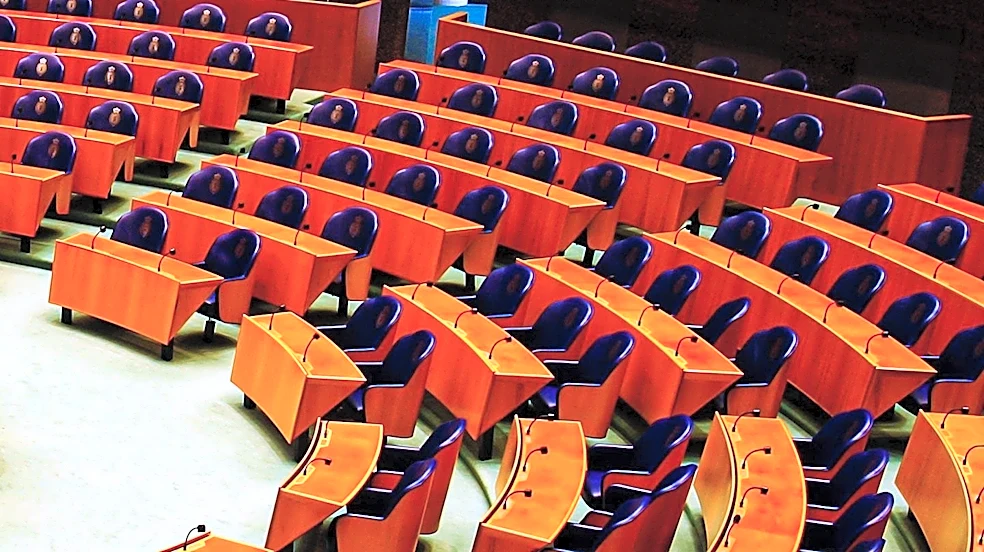
Nearly half of the members of the Dutch House of Representatives (Tweede Kamerleden) have delivered debate speeches that, according to AI detection software, were largely generated by artificial intelligence. An investigation by Investico and De Groene
Amsterdammer analyzed 2,715 debate contributions made between January 1 and September 30. Out of these, 297 texts were identified by AI detection software as being predominantly AI-written, affecting a total of 68 Members of Parliament. The research indicated that over 30% of the debate contributions from the BBB party showed AI usage, while no AI use was detected for the SP, Partij voor de Dieren, and Volt parties. Peter van Duijvenvoorde, a Forum voor Democratie MP, admitted to using AI for his debate contributions, calling it 'shameful and dishonest,' and stated he has since stopped the practice.
Why It's Important?
The revelation that a significant number of Dutch parliamentarians may be using AI to draft their debate texts raises important questions about authenticity, accountability, and the integrity of legislative processes. While the source is not U.S.-based, the implications are globally relevant for democratic institutions. The use of AI in political discourse could lead to a decline in original thought and genuine representation, as constituents expect their elected officials to articulate their own positions and arguments. This practice could also erode public trust in politicians if it is perceived that their words are not their own. Furthermore, it highlights a growing ethical dilemma regarding the appropriate use of advanced technology in governance and public service, potentially influencing debates on AI regulation and transparency in political communication across various nations, including the U.S.
What's Next?
The findings are likely to spark further debate within the Dutch political landscape regarding the ethical guidelines for AI use by elected officials. There may be calls for new policies or codes of conduct to address the use of AI in drafting legislative speeches and other official communications. Other political parties and civil society groups might demand greater transparency from MPs regarding their use of AI tools. The incident could also prompt a broader discussion on the reliability and accuracy of AI detection software, as the researchers noted a small margin of error, meaning not all flagged texts are definitively AI-generated. This situation could serve as a precedent for other countries, including the U.S., to proactively establish guidelines for AI use in government to maintain public trust and ensure the authenticity of political discourse.
Beyond the Headlines
This development underscores a broader societal challenge concerning the integration of artificial intelligence into professional and public life. Beyond the immediate political implications, the use of AI in crafting legislative speeches touches upon fundamental questions of human agency and intellectual property in an era of advanced automation. If elected officials increasingly rely on AI for their public statements, it could subtly shift the nature of political leadership, potentially prioritizing efficiency and data-driven rhetoric over nuanced human understanding and empathy. This trend could also lead to a homogenization of political language, as AI models often draw from common datasets, potentially stifling diverse perspectives and original thought. The ethical considerations extend to the potential for AI to be used for propaganda or to manipulate public opinion, making transparency and clear ethical frameworks crucial for the future of democratic governance.