

What's Happening?
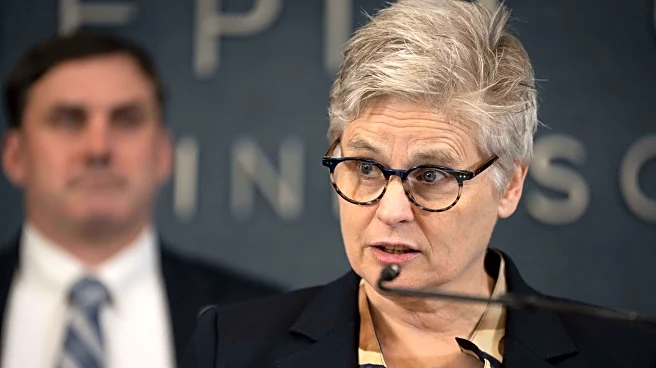
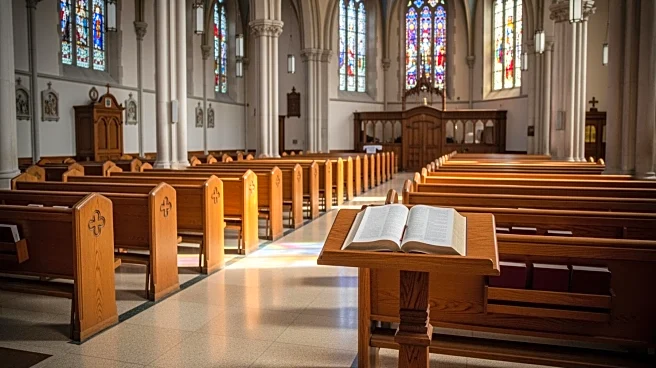
Federal prosecutors have decided to drop charges against Heather Danae Lewis, who was mistakenly identified as a participant in a protest at a Minnesota church. The protest, which took place in January, was against Immigration and Customs Enforcement
(ICE) and disrupted a service at Cities Church in St. Paul. Lewis was one of 30 individuals charged with civil rights violations for allegedly interfering with the congregants' right to exercise their religious beliefs. However, it was later revealed that Lewis did not attend the protest. Her lawyer, Brock Hunter, explained that Lewis was in the vicinity of the protest by coincidence, as she was picking up auction items from a nearby supermarket parking lot. The charges against her have been dropped with prejudice, meaning they cannot be refiled. This decision comes after a magistrate judge criticized the justice department for delays in the discovery process.
Why It's Important?
This case highlights the potential for errors in legal proceedings, particularly when relying on circumstantial evidence such as cellphone data. The mistaken identity of Heather Danae Lewis underscores the importance of thorough investigations and the potential consequences of prosecutorial haste. The decision to drop the charges reflects a commitment to justice and the protection of individual rights. It also serves as a reminder of the challenges faced by the justice system in balancing the enforcement of laws with the protection of civil liberties. The case has broader implications for how protests are policed and the methods used to identify participants, which can impact public trust in the legal system.
What's Next?
With the charges against Lewis dropped, attention may shift to the remaining individuals charged in connection with the protest. The justice department may face increased scrutiny over its handling of the case, particularly regarding the use of cellphone data and the speed of the discovery process. This incident could prompt calls for reforms in how protests are monitored and how evidence is gathered and used in prosecutions. Additionally, there may be discussions about the role of civil rights in protest activities and the legal boundaries of such demonstrations.