





What's Happening?
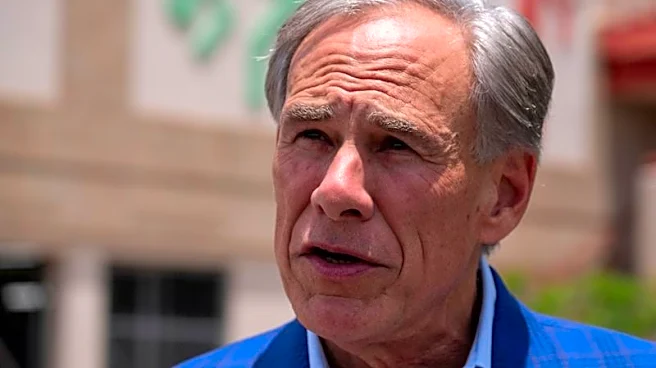
Minnesota leaders have filed a federal lawsuit against Texas Governor Greg Abbott to compel the extradition of U.S. Immigration and Customs Enforcement (ICE) officer Christian Castro. Castro faces four counts of second-degree assault and one count of falsely
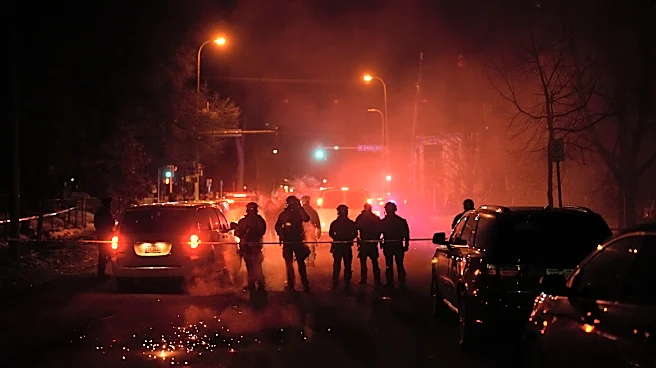
reporting a crime in Minnesota. The charges stem from an incident earlier this year in Minneapolis where Castro allegedly fired into an occupied home during 'Operation Metro Surge,' injuring Julio Sosa-Celis in the leg. Surveillance footage reportedly contradicted Castro's account to federal investigators, in which he claimed Sosa-Celis and another man attacked him. Governor Abbott has refused Minnesota's extradition request, citing alleged welfare fraud in Minnesota's social programs and stating he would not respond until Minnesota addresses these claims. Minnesota Attorney General Keith Ellison argues that federal law mandates states to cooperate on extradition requests, making Abbott's refusal unconstitutional and a violation of federal and Texas law. The lawsuit also names Cameron County Sheriff Manuel Trevino to prevent Castro's release, as Texas law limits the detention period for individuals awaiting extradition to 90 days.
Why It's Important?
This lawsuit highlights a significant constitutional and legal dispute between states regarding the enforcement of federal law and interstate cooperation. The U.S. Constitution's Extradition Clause generally requires states to deliver fugitives to the state from which they fled. Governor Abbott's refusal to extradite, based on unrelated allegations of welfare fraud, challenges this established legal principle and could set a precedent for other states to resist extradition requests based on political or unrelated grievances. This situation also underscores the ongoing tensions surrounding immigration enforcement and the actions of federal agents, particularly in the context of 'Operation Metro Surge,' which has been linked to other controversial incidents, including the deaths of U.S. citizens. The outcome of this case could clarify the limits of gubernatorial discretion in extradition matters and reinforce the mechanisms of interstate legal cooperation, or conversely, introduce new complexities into the process, potentially impacting the ability of states to prosecute individuals accused of crimes across state lines.
What's Next?
The federal lawsuit will proceed in the Southern District of Texas, where the court will likely evaluate the constitutionality of Governor Abbott's refusal to extradite Christian Castro. Minnesota Attorney General Keith Ellison's office will argue that the duty to extradite is ministerial and non-discretionary, citing federal precedents. The court's decision will determine whether Governor Abbott is legally compelled to sign the rendition warrant. If the court sides with Minnesota, it would mandate Castro's transfer to Minnesota for prosecution. Conversely, a ruling in favor of Governor Abbott could embolden other state executives to resist extradition requests, potentially leading to further legal challenges and a re-evaluation of interstate extradition protocols. The lawsuit's inclusion of Cameron County Sheriff Manuel Trevino indicates an immediate concern to prevent Castro's release from custody, suggesting that legal maneuvers to secure his detention will continue while the broader extradition dispute is resolved. This case could also prompt legislative discussions at the federal level regarding the clarity and enforcement of interstate extradition laws.
Beyond the Headlines
Beyond the immediate legal battle, this case delves into deeper issues of federalism, state sovereignty, and the accountability of federal agents. Governor Abbott's stance, linking extradition to unrelated state-level issues, reflects a broader political strategy that often uses state power to challenge federal mandates or policies. This approach can strain inter-state relations and complicate the administration of justice. Furthermore, the incident involving an ICE agent and the subsequent charges raise questions about oversight and accountability within federal law enforcement agencies. The use of surveillance footage to contradict an agent's account highlights the importance of transparency and independent investigation in cases of alleged misconduct. The case also touches upon the politicization of immigration enforcement, where actions by federal agencies and responses by state officials become intertwined with broader political narratives. The outcome could influence public perception of federal law enforcement and the balance of power between state and federal authorities, potentially shaping future debates on immigration policy and criminal justice reform.