
What's Happening?
The Department of Justice (DOJ) is currently reviewing over 2 million documents related to the late Jeffrey Epstein, with only a small fraction having been released to the public. As of now, 12,285 documents,
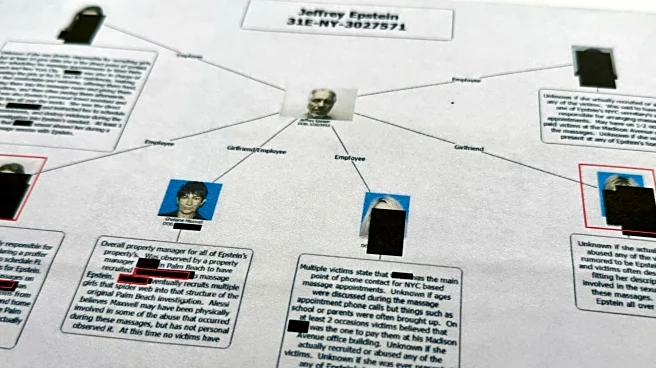
totaling approximately 125,575 pages, have been made available on the DOJ's Epstein Library webpage. This effort is part of the Epstein Files Transparency Act, signed into law by President Trump, which mandated the DOJ to complete its review and release all relevant records by December 19, 2025. However, the DOJ has not met this deadline due to the extensive volume of material. The review process involves about 125 federal prosecutors from Manhattan and 400 lawyers across the DOJ. The DOJ anticipates that many of the documents are duplicates, which complicates the review process. The department has faced criticism for missing the deadline and for the heavy redactions in the released documents, which it defends as necessary to protect victim privacy and ongoing investigations.
Why It's Important?
The delayed release of the Epstein files has significant implications for transparency and accountability within the justice system. The Epstein case, involving high-profile allegations of sex trafficking and abuse, has drawn intense public interest and scrutiny. The DOJ's handling of the document release is crucial for maintaining public trust, particularly in cases involving powerful individuals and sensitive information. The delay and redactions have sparked criticism from lawmakers and the public, highlighting the challenges of balancing transparency with privacy and legal obligations. The outcome of this process could influence future legislative and judicial approaches to handling similar high-profile cases, impacting how sensitive information is managed and disclosed.
What's Next?
The DOJ has not provided a specific timeline for completing the document review and release process, stating that it will continue for the next few weeks. Lawmakers, including Reps. Thomas Massie and Ro Khanna, have accused the administration of violating the law by missing the deadline and providing overly redacted documents. The DOJ maintains that redactions are necessary to protect victims and ongoing legal proceedings. As the review continues, there may be further legal and political challenges, particularly if the public and lawmakers remain dissatisfied with the pace and transparency of the process. The situation could lead to calls for additional oversight or legislative changes to ensure timely and transparent handling of similar cases in the future.