






What's Happening?
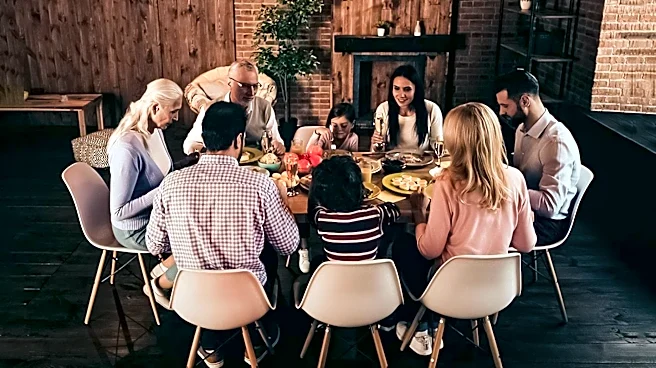
The Duluth chapter of Braver Angels, a national nonpartisan organization, recently hosted a community dinner titled 'Land of Neighbors: A Community Listening Session.' The event brought together residents to discuss various concerns facing Duluth, Minnesota,
shortly after a recent election. Participants engaged in respectful conversations around dinner tables, sharing personal experiences and reflecting on the current state of their community. Key topics of discussion included relationships among residents, safety within the community, and the rising cost of living, particularly its impact on younger generations. Local leaders of Braver Angels emphasized that the primary goal of the event was to foster listening and understanding among community members, laying the groundwork for future actions to address these shared concerns. John Wolforth, Duluth chapter co-chair for Braver Angels, highlighted the importance of residents being able to engage in dialogue despite differing viewpoints.
Why It's Important?
This initiative by Braver Angels in Duluth is important because it directly addresses the growing political polarization and social fragmentation observed across the U.S. By creating a structured environment for respectful dialogue, the organization aims to bridge divides and foster a sense of unity within the community. The focus on local issues like safety and cost of living underscores how national political tensions can manifest and impact daily life at the local level. Such community-led efforts are crucial for strengthening social cohesion and enabling collaborative problem-solving, which can be particularly challenging in a politically charged climate. If successful, this model could serve as a blueprint for other communities seeking to overcome divisions and collectively tackle local challenges, potentially leading to more effective local governance and improved quality of life for residents. Conversely, a lack of such initiatives could exacerbate existing tensions and hinder progress on critical local issues.
What's Next?
Following this initial listening session, the Duluth chapter of Braver Angels plans to build upon the shared understanding gained from the community discussions. The immediate next steps involve analyzing the feedback and concerns raised by participants to identify common themes and priorities. The organization aims to translate this understanding into actionable strategies to address the identified issues, such as safety and cost of living. While specific actions have not yet been detailed, the emphasis on listening suggests that future initiatives will likely involve collaborative projects or advocacy efforts informed by community input. The success of these subsequent steps will depend on continued community engagement and the ability of Braver Angels to mobilize resources and partnerships to implement solutions. The organization hopes that by fostering ongoing dialogue, residents will develop stronger interpersonal connections and a greater capacity for collective action.
Beyond the Headlines
The Braver Angels initiative in Duluth touches upon deeper societal implications beyond immediate local concerns. It highlights a broader national trend of seeking solutions to political and social polarization through grassroots efforts. The methodology of bringing people together for shared meals and structured conversations aims to re-humanize those with differing views, moving beyond abstract political labels to personal experiences. This approach implicitly challenges the often-divisive narratives prevalent in mainstream media and online platforms, promoting empathy and mutual respect as foundational elements for democratic functioning. The long-term success of such initiatives could contribute to a cultural shift towards more constructive civic engagement, potentially influencing how communities address complex issues ranging from local policy to national debates. It also raises questions about the role of non-governmental organizations in fostering civil discourse where traditional political institutions may be struggling.