







What's Happening?
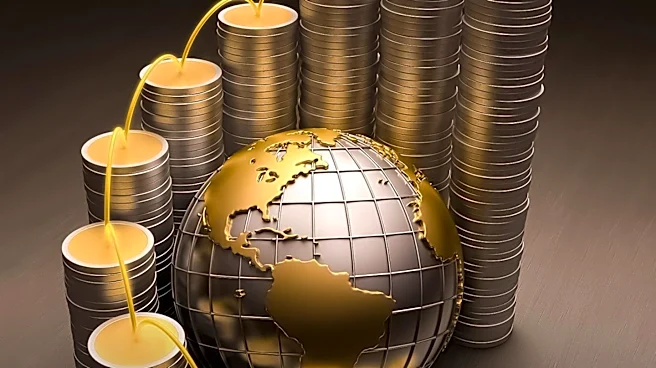
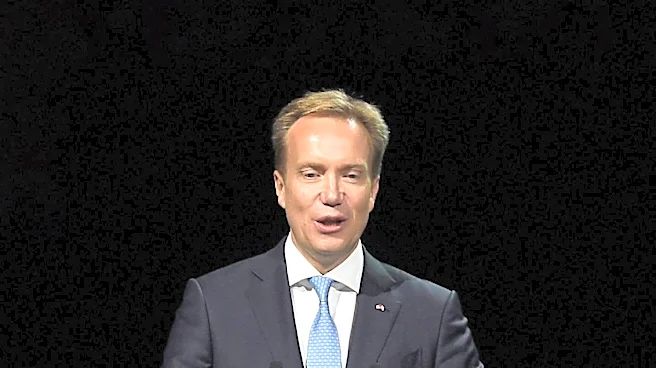
President Allassane Ouattara of Côte d’Ivoire highlighted international trade as a powerful driver of growth, capable of expanding markets, diversifying exports, facilitating technology diffusion, enhancing business competitiveness, and integrating economies
into global value chains. He made these remarks at the presidential lecture during the 20th anniversary of the Aid for Trade program and the 10th Global Review of Aid for Trade, held on October 29, 2026, at the World Trade Organization (WTO) headquarters in Geneva, Switzerland. The event included discussions with the International Trade Centre (ITC) and WTO on standards, regulation, and trade facilitation, focusing on small firms and global rules. President Ouattara stressed that while trade and investment are crucial, their benefits are not automatic or evenly distributed, particularly for economies primarily exporting raw materials.
Why It's Important?
President Ouattara's address underscores a critical perspective on global economic development, particularly for developing nations. His emphasis on moving beyond raw material exports to value creation, competitiveness, and productive transformation is vital for achieving sustainable growth and resilience against external shocks. For the U.S. and other developed economies, this perspective highlights the importance of equitable trade policies and international cooperation that enable vulnerable countries to participate more effectively in the global economy. It also points to potential opportunities for U.S. businesses in technology transfer, infrastructure development, and investment in processing and manufacturing sectors within developing countries, fostering mutually beneficial economic relationships and contributing to global stability.
What's Next?
The discussions at the Aid for Trade program's 20th anniversary will likely influence future international trade policies and development initiatives. President Ouattara's call for aligning trade and investment policies with industrial, agricultural, and technological strategies suggests a push for more integrated and strategic approaches to economic development. This could lead to increased international cooperation aimed at improving infrastructure, developing skills, facilitating access to finance, and promoting technology transfer in developing countries. Stakeholders, including the WTO, ITC, and national governments, are expected to consider these insights in shaping future programs designed to make global trade more inclusive and beneficial for all participating economies, particularly those seeking to diversify and add value to their exports.
Beyond the Headlines
President Ouattara's remarks delve into the deeper implications of globalization, advocating for a 're-globalization' that prioritizes value creation and productive transformation over a primary focus on raw material exports. This vision challenges the traditional economic models that often leave developing countries in a position of dependency. It suggests a shift towards fostering local processing, manufacturing, and marketing activities, which can lead to significant job creation, especially for young populations, and enhance economic resilience. The ethical dimension lies in ensuring that global trade truly serves as a tool for equitable development, rather than perpetuating existing inequalities. This perspective calls for a re-evaluation of trade rules and international aid to ensure they genuinely empower developing nations to achieve self-sufficiency and sustainable growth.