






What's Happening?
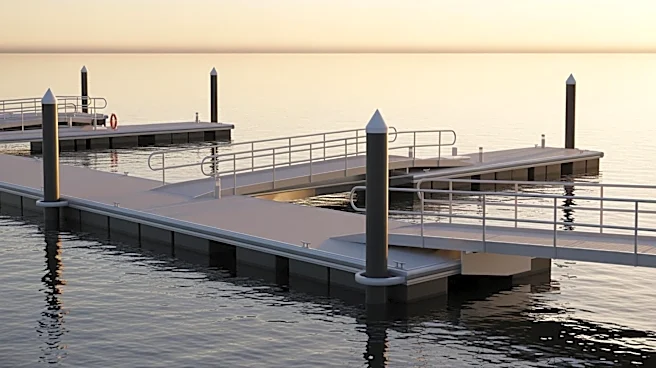
Annapolis, Maryland, has commenced construction on a new floating dock that complies with the Americans with Disabilities Act (ADA). The Eastport Floating Dock, located at the end of 6th Street on the Back Creek side, is expected to be completed in three
weeks. This project, costing $440,000, is funded by a $350,000 grant from the Maryland Department of Natural Resources State Waterway Improvement program, $65,000 in Annapolis bonds, and $25,000 in capital reserves. The new dock will join two other ADA-compliant floating piers and marinas in Annapolis, including the Annapolis Adaptive Boating Center, which features accessible boarding equipment. This development is part of a broader effort by Anne Arundel County to expand public access to boat ramps, following the closure and reopening of the Discovery Village ramp.
Why It's Important?
The construction of the ADA-compliant floating dock in Annapolis is significant as it enhances accessibility for individuals with disabilities, promoting inclusivity in recreational activities. This project reflects a growing trend towards making public spaces more accessible, which can have positive social impacts by enabling more people to participate in community activities. Additionally, the project is a part of a larger initiative to improve public infrastructure, which can boost local tourism and economic activity by attracting more visitors to the area. The funding from state and local sources underscores the importance of collaborative efforts in public infrastructure projects.
What's Next?
Upon completion, the Eastport Floating Dock will provide enhanced access for fishing and dinghy activities, potentially increasing the use of local waterways. The project may also encourage further developments in public infrastructure aimed at improving accessibility. Local authorities might continue to seek additional funding and support for similar projects, fostering a more inclusive environment for residents and visitors. The success of this project could serve as a model for other communities looking to improve accessibility in public spaces.