





What's Happening?
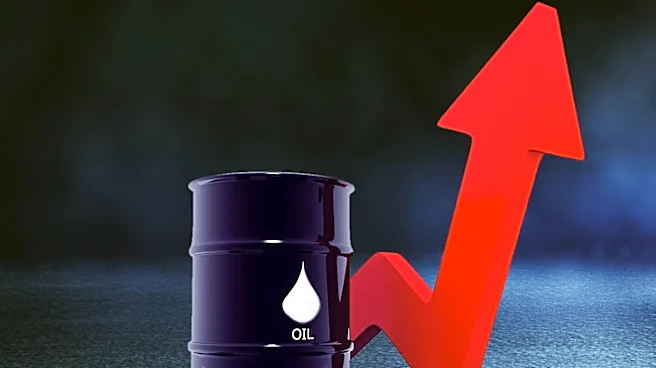
The U.S. dollar strengthened against major currencies as tensions between the U.S. and Iran escalated, leading to a rise in oil prices. Brent crude futures increased by 3.3%, reaching over $90 per barrel, following U.S. military actions against Iran.
The dollar's rise is attributed to investors seeking safe-haven assets amid geopolitical instability. The Federal Reserve is expected to maintain interest rates at its upcoming meeting, with a high probability of no change, despite ongoing discussions about potential rate hikes to combat inflation.
Why It's Important?
The strengthening of the dollar and rising oil prices have significant implications for global markets and the U.S. economy. Higher oil prices can lead to increased costs for consumers and businesses, potentially impacting economic growth. The geopolitical tensions add uncertainty to financial markets, influencing investor behavior and currency valuations. The Federal Reserve's monetary policy decisions will be closely watched, as they could affect inflation and economic stability. The situation underscores the interconnectedness of global events and their impact on domestic economic conditions.
What's Next?
The ongoing conflict between the U.S. and Iran is likely to continue influencing oil prices and currency markets. Investors will monitor developments closely, as further escalation could lead to increased volatility. The Federal Reserve's upcoming meeting will be pivotal in determining the direction of U.S. monetary policy, with potential implications for inflation and economic growth. Market participants will also be attentive to any changes in geopolitical dynamics that could affect global economic conditions.