




What's Happening?
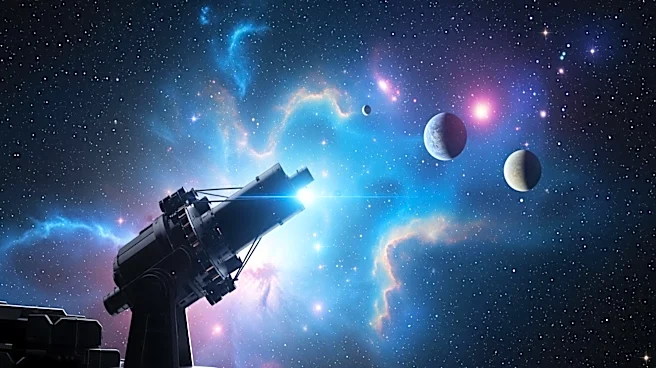
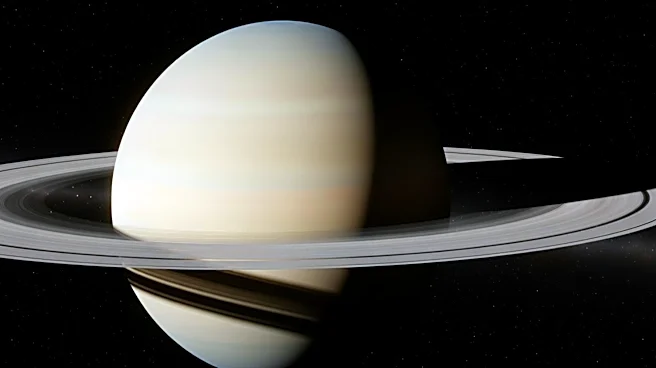
The Hubble Space Telescope, a pivotal instrument in NASA's exploration efforts, has been instrumental in studying seasonal changes on Saturn. Between 2018 and 2020, Hubble's observations revealed a significant increase in wind speeds near Saturn's equator,
from approximately 800 miles per hour to about 1,000 miles per hour. This change is attributed to the varying solar energy Saturn receives at different points in its orbit, which affects its atmospheric conditions. These findings are part of a broader effort to understand how seasons work on different planets, including gas giants like Jupiter and Saturn, which experience seasonal variations distinct from those on Earth.
Why It's Important?
Understanding seasonal changes on planets like Saturn provides valuable insights into atmospheric dynamics and solar energy distribution in our solar system. These studies help scientists draw parallels and contrasts between terrestrial and gas giant planets, enhancing our comprehension of planetary atmospheres. The data gathered by Hubble contributes to our knowledge of how solar energy influences atmospheric conditions, which is crucial for predicting weather patterns and understanding climate systems on other planets. This research not only advances planetary science but also aids in the development of models that could predict atmospheric behavior on exoplanets, potentially identifying those with Earth-like conditions.