
What's Happening?
The United States has justified its military actions in Somalia as a measure of self-defense to prevent terrorist attacks on American soil. According to U.S. Army Lt. Gen. John Brennan, the second-highest-ranking
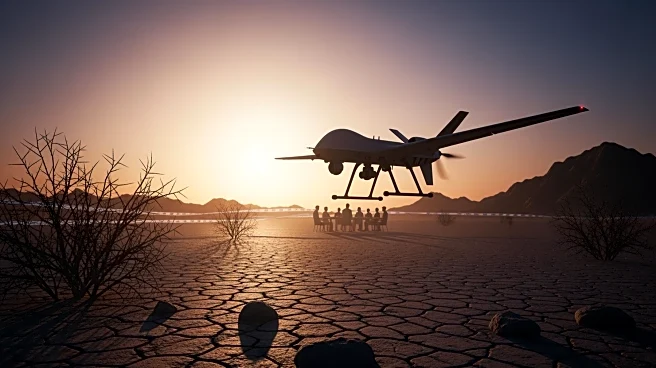
officer at U.S. Africa Command, the primary threats are from groups affiliated with ISIS and al Qaeda. Brennan highlighted that these groups pose a threat not only to the U.S. but also to Europe, and that American citizens are being recruited via social media for potential attacks within the U.S. The U.S. has conducted numerous airstrikes in Somalia, targeting ISIS-Somalia and al-Shabab militants, in collaboration with Somali and international partners.
Why It's Important?
The U.S. military operations in Somalia underscore the ongoing global fight against terrorism and the strategic importance of Africa in this context. By targeting terrorist networks in Somalia, the U.S. aims to disrupt potential plots against its homeland and maintain international security. This approach reflects a broader strategy of addressing threats at their source, rather than waiting for them to manifest domestically. The operations also highlight the challenges of combating terrorism in regions with complex political and social dynamics. The focus on Africa, particularly Somalia, indicates a shift in the geographical focus of counterterrorism efforts, which were previously centered on the Middle East.
What's Next?
The U.S. is likely to continue its military operations in Somalia as part of its broader counterterrorism strategy. The effectiveness of these operations will depend on continued collaboration with Somali and international partners. The situation in Somalia remains volatile, and the U.S. will need to balance military actions with diplomatic efforts to stabilize the region. The international community will be watching closely to see how these operations impact the broader fight against terrorism and whether they lead to long-term stability in Somalia and the surrounding region.