







What's Happening?
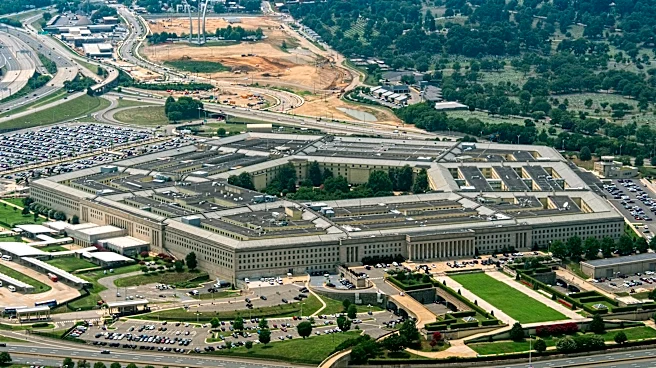
A recent report indicates that Jennifer Hegseth, wife of US Defense Secretary Pete Hegseth, travels with him primarily to monitor his behavior due to past accusations of alcoholism. An insider revealed to The New York Times that Jennifer's presence is intended
to 'keep him out of trouble.' Former Fox News colleagues of Pete Hegseth reportedly told NBC News in 2024 that they frequently detected alcohol on him before live broadcasts, with one colleague noting that his drinking problem was a common topic of discussion behind the scenes. Beyond this supervisory role, Jennifer Hegseth is also described as her husband's most influential advisor. She is reportedly involved in active decision-making, attends his meetings with reporters, recruits potential staff members, and assists in creating video content for the Defense Department. This information was originally reported by Ishita Verma on Mandatory and subsequently by Reality Tea.
Why It's Important?
This report highlights potential concerns regarding the conduct and decision-making environment within the highest levels of the U.S. Department of Defense. The alleged need for the Defense Secretary's wife to accompany him due to past issues with alcoholism raises questions about the Secretary's personal stability and professional judgment. Furthermore, her reported extensive involvement in official duties, including active decision-making, attending meetings with reporters, and staff recruitment, blurs the lines between official government roles and personal influence. This situation could lead to scrutiny regarding transparency, accountability, and potential conflicts of interest within the Defense Department, impacting public trust and the perception of leadership integrity. The involvement of an unelected, unofficial advisor in such critical capacities could also set a problematic precedent for government operations.
What's Next?
The report's claims could prompt further investigation or calls for clarification from the Department of Defense or congressional oversight committees regarding the roles and responsibilities of unofficial personnel within the Secretary's office. Media scrutiny is likely to continue, potentially leading to more detailed reports or official statements addressing the allegations. Stakeholders, including political leaders and civil society groups, may demand greater transparency regarding the decision-making processes and the influence of non-governmental individuals in national security matters. Depending on the public and political reaction, there could be internal reviews or policy adjustments within the Defense Department to formalize guidelines for the involvement of family members in official capacities, especially concerning sensitive national security issues.
Beyond the Headlines
The deeper implications of this report touch upon the ethical boundaries of personal and professional life within high-ranking government positions. The alleged reliance on a spouse to manage personal conduct, coupled with her significant advisory role, raises questions about the formal and informal power structures within the Defense Department. It also highlights the challenges of maintaining professional decorum and avoiding perceptions of undue influence when personal relationships intersect with critical national security responsibilities. This situation could spark broader discussions about the vetting processes for senior government officials, the support systems available to them, and the mechanisms in place to ensure that personal issues do not compromise national security or public trust. The report also implicitly questions the accountability of unelected individuals who wield significant influence in government operations.