
What's Happening?
A group of transit advocates and academics, the Effective Transit Alliance (ETA), suggests that the Metropolitan Transportation Authority (MTA) could reduce the estimated $7.7 billion cost of the 125th
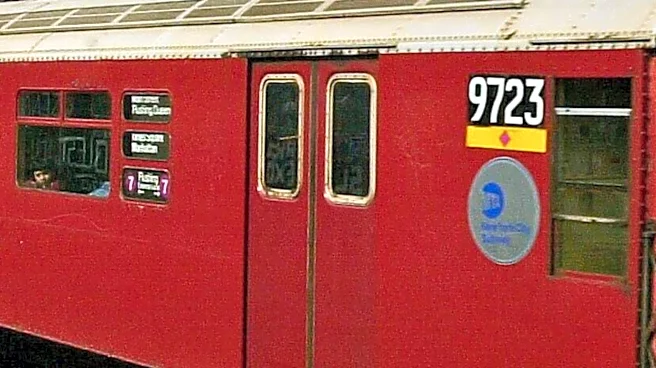
Street subway extension by half. Their report, titled 'Digging Out of a Very Deep Hole: Saving Billions on 125th Street,' advocates for the use of 'cut-and-cover' construction techniques and the building of shallower, smaller stations. This method involves excavating the street to construct the subway tunnel just beneath the surface, then covering it back up. The ETA argues that this approach, combined with narrower platforms and the elimination of extensive non-passenger areas, could bring the project's cost down to $3.4 billion, aligning with the Marron Institute's 'A Better Billion' proposal. The report comes as the MTA is accelerating design and environmental review for the project, which aims to extend the Q train with three new stops along 125th Street, significantly improving transit connections in Harlem.
Why It's Important?
The proposed cost reduction for the 125th Street subway extension holds significant implications for New York City's transit infrastructure and future development. If the MTA can successfully implement these cost-saving measures, it could set a precedent for more affordable subway expansions across the city. The current high cost of subway construction in New York often limits the number of projects that can be undertaken, leaving many underserved areas without necessary transit improvements. By adopting techniques like 'cut-and-cover' and optimizing station design, the MTA could free up billions of dollars, enabling the construction of additional subway lines in areas like Utica Avenue and Nostrand Avenue, which, while not having the same projected ridership as 125th Street, still require better transit access. This shift could lead to a more equitable and expansive public transportation network, benefiting a wider range of New Yorkers and fostering economic growth in previously isolated communities.
What's Next?
The MTA is currently in the design and environmental review phase for the 125th Street subway extension, and officials have indicated an openness to exploring all options for more cost-effective project delivery. The ETA hopes that by raising these concerns early, they can influence the MTA's decisions before construction plans are finalized. The agency will be hearing from potential contractors about the best methods to build the stations, which could include considering the 'cut-and-cover' technique. A key challenge will be addressing the political and logistical hurdles associated with 'cut-and-cover,' such as coordinating with utility companies like ConEd, managing street traffic, and mitigating complaints from businesses and residents about construction disruptions. The MTA's success in recent projects, like the Metro-North Park Avenue viaduct repair, where new construction methods led to under-budget and faster completion, suggests a willingness to innovate. The outcome of these discussions will determine whether the 125th Street extension proceeds with its current high cost or adopts a more economical approach, potentially paving the way for future subway expansions.
Beyond the Headlines
The debate over the 125th Street subway extension's cost and construction methods highlights a broader systemic issue within U.S. infrastructure projects: the often exorbitant 'soft costs' and the tendency towards over-engineering. The ETA report points out that design costs, legal fees, and a federally mandated 40% contingency fee account for 43% of the projected cost, more than double that of the first phase of the Second Avenue line. This suggests that significant savings could be achieved even before physical construction begins by streamlining administrative processes and re-evaluating contingency requirements. Furthermore, the report's emphasis on international precedents, such as Italy's 'Milan method' for soft ground construction and China's ability to build close to existing lines, underscores a potential cultural or institutional resistance within the U.S. to adopt proven, cost-effective global practices. Embracing these techniques could not only save billions on individual projects but also foster a more innovative and efficient construction industry, ultimately allowing New York City to meet its critical transit needs more effectively and sustainably.