







What's Happening?
The U.S. Department of Defense (DoD) is organizing a high-tech demonstration, dubbed Groundreaker 1, in mid-October at the Army National Guard installation at Camp Grafton in North Dakota. This event will feature private companies showcasing their most
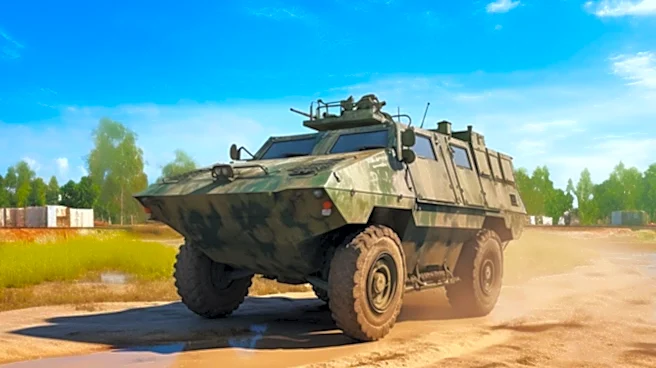
advanced land drones and robotic vehicles. The initiative is part of a broader military effort to integrate uncrewed systems into their fleets, accelerating the development of land drones following significant advancements in aerial and naval drone technology. The Army is specifically seeking contractors to present land drones capable of surveillance, supply hauling, search and rescue operations, perimeter security, and other functionalities. Key requirements for these unmanned ground vehicles (UGVs) include all-terrain mobility and obstacle avoidance, with a focus on tasks that typically pose risks to human troops, such as pilot rescues. The Pentagon announced this contract on August 21, designating it for "selected vendors" to expand the "Ground Domain."
Why It's Important?
This demonstration is crucial for the future of U.S. military operations, as it aims to rapidly advance the capabilities of unmanned ground vehicles. The integration of UGVs can significantly reduce risks to military personnel by automating dangerous tasks, thereby enhancing troop safety and operational efficiency. The event also fosters collaboration between the military and private industry, creating a feedback loop that is vital for the development of cutting-edge defense technologies. The demand for advanced UGVs, particularly those with all-terrain mobility and obstacle avoidance, highlights a strategic shift towards more autonomous warfare. Furthermore, the emphasis on creating "fully autonomous" land drones that are resistant to jamming and signal interception addresses critical vulnerabilities in current drone technology, ensuring their effectiveness in contested environments. This push for innovation could lead to a new generation of military hardware, impacting defense spending, technological research, and the overall strategic posture of the U.S. armed forces.
What's Next?
Following the Groundreaker 1 demonstration in North Dakota, the Department of Defense will evaluate the performance of the showcased land drones. The feedback gathered from these tests will be instrumental in guiding future procurement decisions and further development efforts. The Army's solicitation for these advanced UGVs indicates a clear path towards integrating more autonomous systems into its operational structure. Developers are already considering larger UGVs that could serve as unmanned fighting vehicles and fulfill a wider array of missions, driven by recent advancements in Artificial Intelligence. The focus will likely shift towards refining these technologies, ensuring their reliability, and developing countermeasures against potential electronic warfare threats. This ongoing development is expected to lead to the deployment of more sophisticated and autonomous land-based robotic systems in military applications, potentially reshaping battlefield tactics and logistics in the coming years.
Beyond the Headlines
The push for advanced land drones carries significant ethical and strategic implications. The development of "fully autonomous" land drones, capable of operating without constant human intervention, raises questions about accountability in combat situations and the potential for unintended consequences. The increasing reliance on AI in military hardware could lead to a paradigm shift in warfare, where machines play a more decisive role. This technological evolution also has broader societal implications, as the capabilities developed for military use could eventually trickle down into civilian applications, such as logistics, security, and disaster response. The "Terminator"-like imagery evoked by the event underscores public concerns about the militarization of AI and robotics. Balancing the strategic advantages of these technologies with ethical considerations and ensuring robust human oversight will be critical as the U.S. military continues to integrate these advanced systems.