






What's Happening?
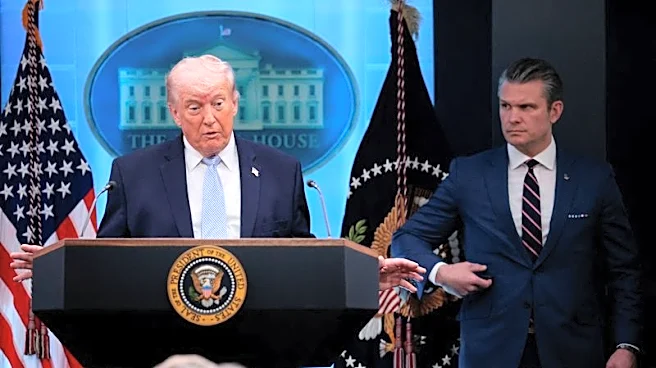
As the deadline set by President Trump for Iran to open the Strait of Hormuz approaches, U.S. markets are experiencing significant volatility. The ongoing conflict between the U.S. and Iran, now in its sixth week, has led to heightened concerns about
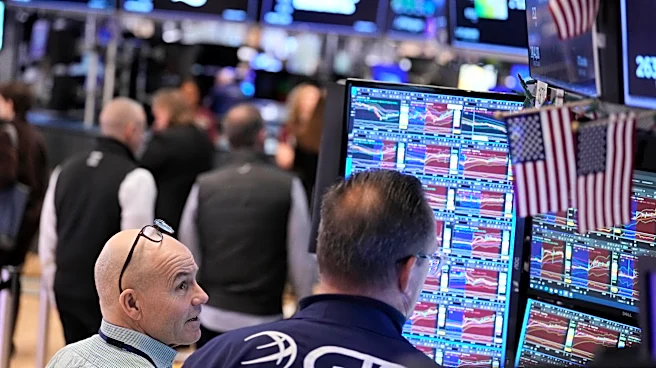
inflation and a potential global economic slowdown. Investors are particularly focused on the impact of the conflict on oil prices, which have surged above $115 per barrel. The uncertainty surrounding the situation has caused Wall Street indexes to decline, with the Dow Jones, S&P 500, and Nasdaq all experiencing losses. The conflict has also affected currency markets, with the U.S. dollar trading near its highest levels in 11 months. Meanwhile, U.S. Treasury yields have risen modestly as investors brace for potential outcomes of the standoff.
Why It's Important?
The ongoing conflict and the looming deadline have significant implications for global economic stability. The closure of the Strait of Hormuz, a critical chokepoint for oil and gas transit, has exacerbated supply concerns, driving up oil prices and contributing to inflationary pressures. This situation complicates the Federal Reserve's monetary policy, as traders no longer anticipate rate cuts this year. The uncertainty has led investors to adopt a cautious approach, with many opting to stay on the sidelines until the situation becomes clearer. The potential for aggressive military action by the U.S. could further destabilize markets, leading to a bearish period for equities and increased volatility across financial markets.
What's Next?
The immediate focus is on the outcome of President Trump's ultimatum to Iran. If Iran does not comply, the U.S. may carry out its threat of military strikes, which could have severe repercussions for global markets. Investors will be closely monitoring developments, as any escalation could lead to further disruptions in oil supply and heightened economic uncertainty. The Federal Reserve and other central banks may need to reassess their strategies in response to these developments, particularly if inflation continues to rise. Additionally, geopolitical tensions could influence future diplomatic and economic relations between the U.S. and other nations involved in the conflict.