


What's Happening?
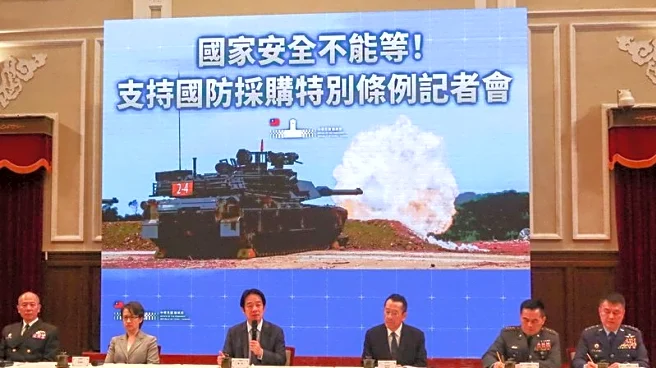
A significant arms package for Taiwan, valued at approximately $14 billion, is awaiting approval from U.S. President Donald Trump. This deal, which includes advanced interceptor missiles such as PAC-3 and NASAMS, represents the largest arms sale to Taiwan to date.
The package is part of a broader strategy to bolster Taiwan's defense capabilities amid increasing military pressure from China. Sources indicate that the deal is ready to be announced following President Trump's upcoming visit to China, where he is scheduled to meet with President Xi Jinping. The timing of the announcement is sensitive, as it coincides with efforts to secure a favorable trade agreement with China. Despite concerns that Trump might reduce military support for Taiwan to appease China, the administration's actions suggest a continued commitment to Taiwan's defense. This move aligns with Trump's National Security Strategy, which prioritizes deterring conflict over Taiwan by maintaining military superiority.
Why It's Important?
The approval of this arms deal is crucial for Taiwan as it faces mounting military threats from China, which claims the island as its territory. The deal underscores the U.S.'s strategic commitment to Taiwan's defense, a key element in maintaining stability in the Asia-Pacific region. For the U.S., this arms sale is a balancing act between supporting Taiwan and managing diplomatic relations with China. The deal could potentially strain U.S.-China relations, especially as both nations are engaged in complex trade negotiations. For Taiwan, the arms package is a significant boost to its defense capabilities, providing reassurance against Chinese military aggression. The deal also reflects the U.S.'s broader geopolitical strategy to counter China's influence in the region.
What's Next?
Following President Trump's return from China, the arms deal is expected to be officially announced. This announcement will likely prompt reactions from both Taiwan and China. Taiwan is expected to proceed with the procurement process, having already authorized contracts for some of the weapons systems included in the package. Meanwhile, China is anticipated to express strong opposition to the arms sale, as it has consistently done in the past. The U.S. administration will need to navigate these diplomatic tensions carefully, balancing its commitments to Taiwan with the broader goal of maintaining stable relations with China.