





What's Happening?
The U.S. military has refuted claims by Iranian news agencies that Iran struck a U.S. Navy vessel near the Strait of Hormuz. This denial comes as the U.S. initiates a new effort, termed 'Project Freedom,' to guide commercial ships through the strait,
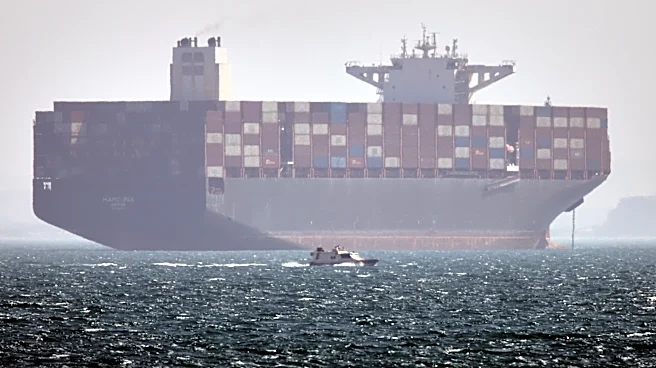
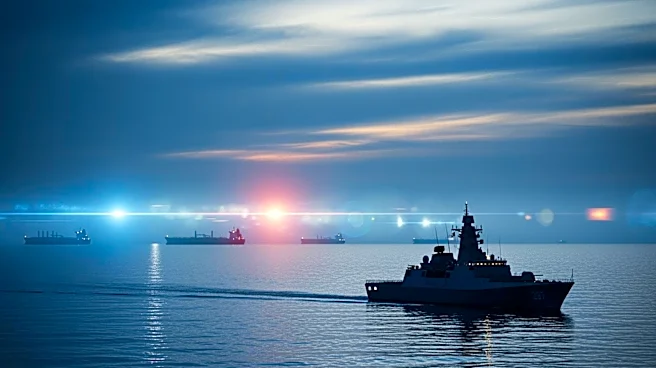
a critical maritime passage for global oil and gas supplies. The U.S. Central Command confirmed that two American-flagged merchant ships have successfully transited the strait, supported by Navy guided-missile destroyers. This initiative follows recent Iranian actions of attacking and blocking vessels in the region. The U.S. military's move is part of a broader strategy announced by President Trump to ensure the safe passage of ships, amidst ongoing tensions with Iran.
Why It's Important?
The Strait of Hormuz is a vital artery for the global energy market, with a significant portion of the world's oil passing through it. Iran's control and recent aggressive actions in the strait have heightened global economic concerns, particularly affecting countries reliant on Persian Gulf oil. The U.S. initiative aims to counteract Iran's strategic advantage in the region, which has allowed Tehran to exert pressure on the global economy despite its military disadvantages. The situation underscores the geopolitical tensions between the U.S. and Iran, with potential implications for international oil prices and global economic stability.
What's Next?
The U.S. has warned of a 'forceful' response to any Iranian attempts to block ships in the strait, indicating a potential escalation in military engagements. The U.S. blockade on Iranian ports and the threat of sanctions on shipping companies paying Iran for transit could further strain relations. Iran's recent proposal for ending the conflict, which includes lifting U.S. sanctions and ending the naval blockade, is under review by the U.S., though skepticism remains about reaching a diplomatic resolution. The ongoing situation may lead to increased military presence and further diplomatic negotiations.
Beyond the Headlines
The U.S. initiative in the Strait of Hormuz highlights the complex interplay of military strategy, economic interests, and international diplomacy. The potential for increased hostilities poses risks not only to regional stability but also to global trade and energy markets. The situation also raises questions about the effectiveness of international maritime law and the role of global powers in enforcing it. The U.S.'s actions may set precedents for future conflicts involving strategic maritime routes.