




What's Happening?
U.S. Rep. Rick Crawford, R-Ark., has voiced strong opposition to a proposed farm labor bill, the Securing Agriculture's Workforce Act, despite acknowledging the need for improved foreign labor access for farmers. His primary concern stems from a provision
within the bill that would allow workers who have unlawfully entered the United States to seek H-2A visa classification if they are already engaged in agricultural work. Crawford, who previously co-led a bipartisan working group focused on the H-2A visa program, stated that this specific language was not part of the group's recommendations and constitutes an 'unforced error.' He emphasized that such a provision could jeopardize broader immigration reform efforts by being perceived as a pathway to citizenship or amnesty for undocumented individuals. The H-2A visa program enables American farmers to temporarily hire foreign workers, with employers required to meet specific wage and housing standards. Arkansas currently ranks 10th nationally in certified H-2A positions.
Why It's Important?
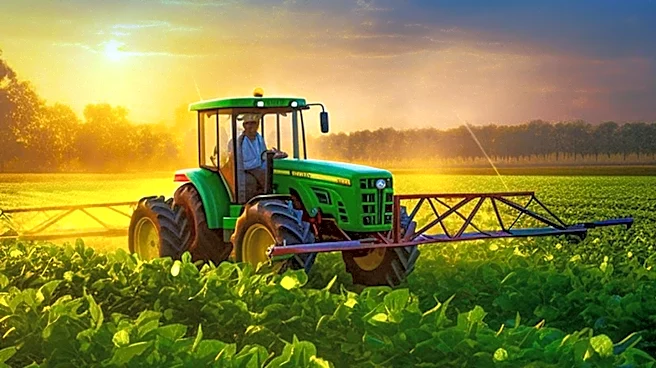
This legislative debate highlights a significant tension between the agricultural sector's demand for labor and immigration enforcement policies. Farmers, particularly in states like Arkansas, rely heavily on the H-2A visa program to address labor shortages, but the application process is often described as expensive and complex. The Arkansas Farm Bureau, for instance, supports the Securing Agriculture's Workforce Act, viewing it as a solution to their workforce challenges. However, Crawford's stance reflects a broader conservative concern about granting any form of leniency to individuals who have entered the country illegally, fearing it could incentivize further unauthorized immigration. The outcome of this bill could significantly impact the operational costs and labor stability for U.S. agricultural producers, while also setting a precedent for how the U.S. addresses the status of undocumented workers in critical industries. The disagreement underscores the difficulty in crafting bipartisan immigration and labor solutions that satisfy both economic needs and political principles.
What's Next?
The House of Representatives faces a tight schedule to advance the Securing Agriculture's Workforce Act. With limited legislative weeks remaining before the pre-election recess and the end of the year, proponents of the bill, including House Agriculture Committee Chair G.T. Thompson, R-Pa., are pushing for its passage. Despite Crawford's reservations, the bill has garnered support from hundreds of organizations, including the Arkansas Farm Bureau and the Agricultural Council of Arkansas. The ongoing discussions will likely involve attempts to reconcile the differing views on the provision concerning undocumented workers. The bill's future may depend on whether a compromise can be reached that addresses both the agricultural industry's labor needs and the concerns regarding immigration enforcement. Additionally, Congress is also under pressure to approve a comprehensive farm bill before year-end, which could influence the legislative strategy for related agricultural measures.
Beyond the Headlines
The controversy surrounding the Securing Agriculture's Workforce Act touches upon deeper ethical and economic considerations within the U.S. agricultural system. The reliance on foreign labor, often from vulnerable populations, raises questions about worker protections, fair wages, and the potential for exploitation. The debate over waiving penalties for undocumented workers also brings to the forefront the moral and practical implications of a de facto amnesty for individuals who have contributed to the U.S. economy for years. This situation highlights the complex interplay between immigration law, labor policy, and the economic viability of a crucial sector. The long-term implications could include shifts in agricultural labor practices, potential legal challenges, and continued political polarization over immigration reform, impacting not only the lives of farmworkers but also the cost and availability of food for American consumers.