








What's Happening?
The Vineland Planning Board in New Jersey has approved the second phase of a site plan for a 300-megawatt data center. This approval allows for the construction of a liquefied natural gas (LNG) tank and fuel cell units, which will enable the data center to
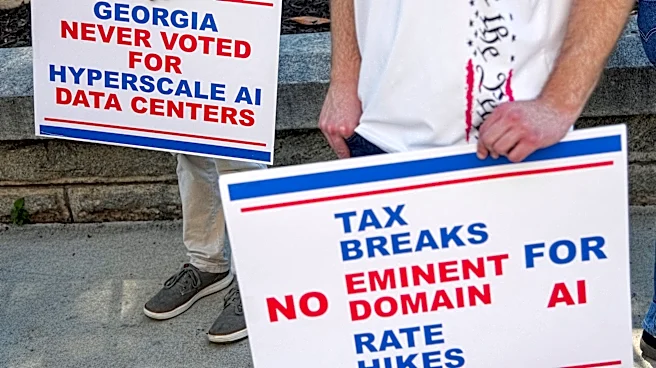
generate its own energy. The project, developed by DataOne for the Nebius Group, is intended to support artificial intelligence infrastructure as part of a $17 billion deal with Microsoft. The decision followed a six-hour public hearing where hundreds of residents voiced concerns regarding LNG safety, carbon emissions, and water usage. Despite significant community opposition and calls for a thorough environmental investigation, the board voted 8-1 in favor of the proposal, citing that the plan requires no variance relief and is permitted under local zoning laws. Board member John Casadia was the sole dissenting vote, emphasizing the need for transparency and environmental impact assessment.
Why It's Important?
This decision is important as it highlights the growing tension between technological infrastructure development and local community concerns, particularly regarding environmental impact and public safety. The approval of a self-sufficient energy data center, powered by LNG and fuel cells, signifies a trend towards energy independence for large-scale tech operations, which could set a precedent for future data center developments across the U.S. The substantial investment by Microsoft and the focus on AI infrastructure underscore the increasing demand for robust computing capabilities. However, the strong community opposition, as evidenced by the grassroots group Sustain SJ, reflects a broader public apprehension about the environmental and safety implications of such projects, especially those involving fossil fuels like LNG. This case also brings to light the challenges local governments face in balancing economic development and technological advancement with resident concerns and environmental stewardship.
What's Next?
Following the Vineland Planning Board's approval, DataOne will likely proceed with the next steps for the data center's construction. However, the project may still require additional regulatory approvals. EarthJustice attorney Casandia Bellevue suggests that developers will need to apply for a pre-construction permit from the New Jersey Department of Environmental Protection and a certificate of operation from the state. Community groups like Sustain SJ are expected to continue their advocacy against the development, potentially exploring legal avenues or further public engagement to challenge the decision. The ongoing debate surrounding the data center's environmental impact and safety concerns could lead to increased scrutiny from state environmental agencies and potentially influence future zoning and permitting processes for similar large-scale industrial projects in New Jersey and beyond. The project's progression will be closely watched as a case study for balancing technological growth with environmental and community welfare.
Beyond the Headlines
The approval of the Vineland data center project, despite significant local opposition, reveals deeper implications regarding the governance of large-scale infrastructure and the evolving landscape of energy consumption for technology. The reliance on liquefied natural gas for power generation, even with fuel cell technology, raises questions about the long-term commitment to renewable energy sources in the tech sector. This situation underscores a potential conflict between the rapid expansion of AI infrastructure, which demands immense energy, and environmental sustainability goals. Furthermore, the community's feeling of being 'blindsided' and the perceived lack of transparency from DataOne highlight a critical need for improved public engagement and communication strategies in development projects. This case could influence future policy discussions on how local zoning laws are applied to projects with significant environmental footprints and how community input is weighed against economic and technological imperatives. It also points to the ethical considerations of energy choices for advanced technologies and the responsibility of corporations in addressing local concerns.