


What's Happening?
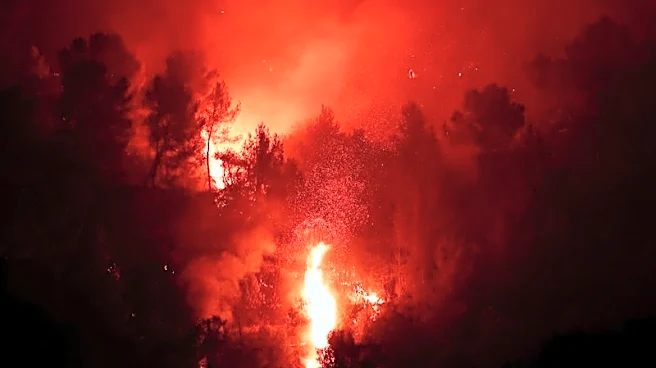
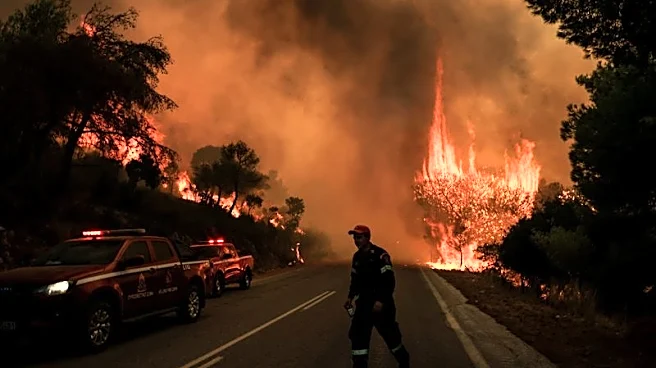
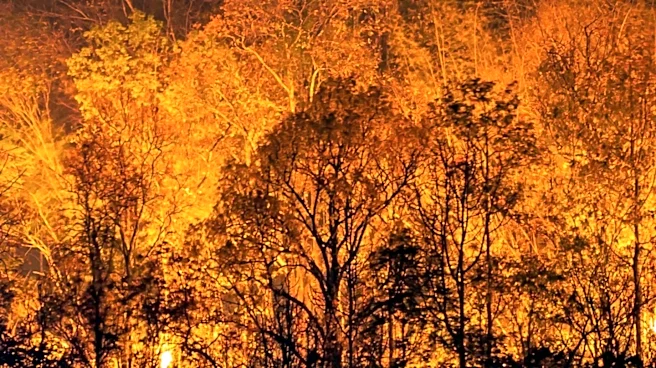
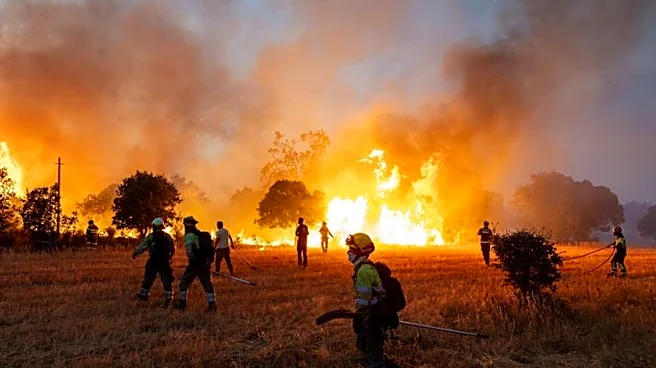
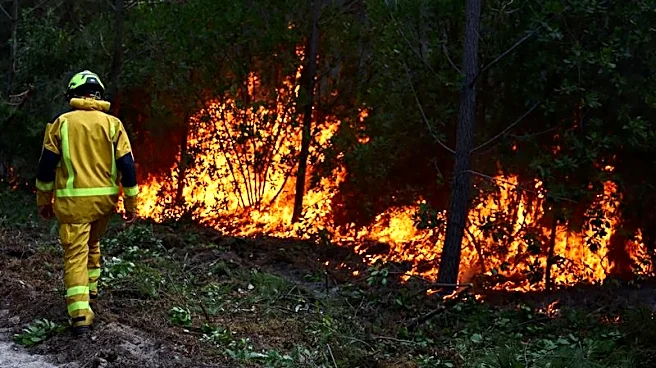
Europe's wildfire crisis has shifted its most dangerous front to Greece, where gale-force winds have driven flames through a seaside resort, forcing hundreds to evacuate by sea. The fires have affected areas near Porto Germeno, with significant damage
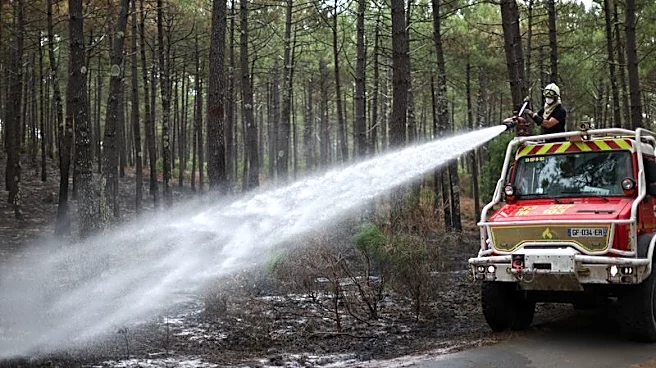
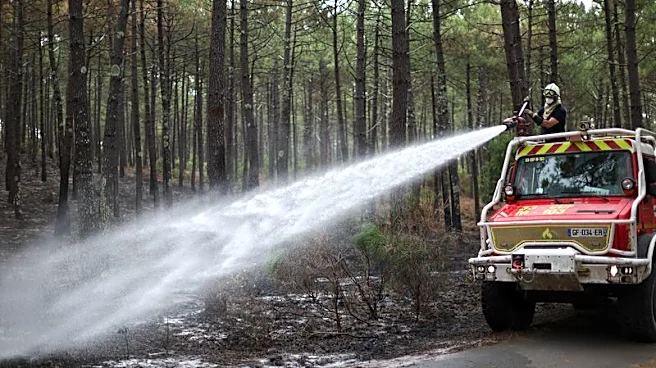
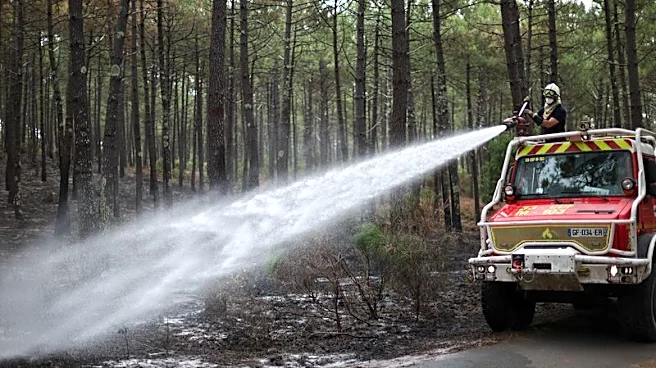
reported. In France, the Gironde fire has burned a vast area of pine forest, leading to the evacuation of thousands. Although the fire is contained, it remains active, with buried hot spots posing ongoing risks. The situation in Greece is reminiscent of the 2018 Mati wildfire, which was Europe's deadliest this century. Firefighting efforts in Greece include specialized teams and aircraft from France and Romania.
Why It's Important?
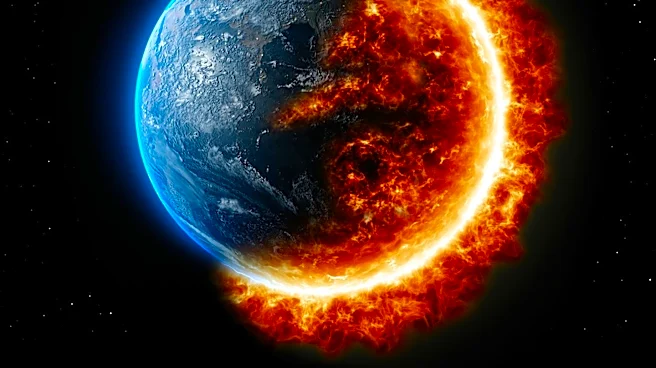
The shift of wildfire danger to Greece highlights the ongoing challenges posed by climate change, which has made Europe the fastest-warming continent. Rising temperatures and prolonged drought conditions have increased the frequency and intensity of wildfires, posing significant risks to human life, property, and ecosystems. The situation underscores the need for international cooperation in firefighting efforts and the importance of developing comprehensive strategies to mitigate the impacts of climate change. The economic and social costs of these disasters are substantial, affecting tourism, agriculture, and local communities.
What's Next?
Firefighting efforts will continue in both Greece and France, with authorities monitoring weather conditions closely. The potential for new fires remains high, necessitating ongoing vigilance and preparedness. In the longer term, European countries may need to invest in more robust fire prevention and response infrastructure, as well as policies aimed at addressing the root causes of climate change. The situation may also prompt discussions on land management practices and the role of international aid in disaster response.