






What's Happening?
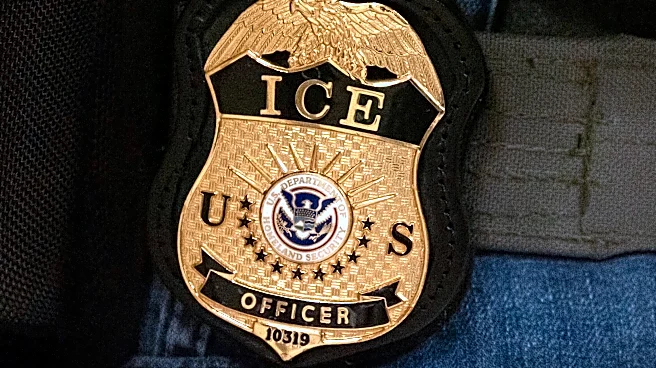
Immigration and Customs Enforcement (ICE) is set to equip its officers with body cameras by the end of September, following years of delays. This move comes amid increased scrutiny and calls for accountability after several fatal shootings involving ICE officers.
However, the agency's policy allows for selective release of footage, stating that videos will only be made public if it is deemed in the 'best interests' of the agency. This policy has raised concerns about transparency, as it grants ICE the discretion to withhold footage that may not reflect positively on the agency. The policy requires officers to activate cameras during routine enforcement activities, but the release of footage after serious incidents will be reviewed by a committee and can be delayed or blocked by the ICE director under certain circumstances.
Why It's Important?
The implementation of body cameras is a significant step towards increasing transparency and accountability within ICE, especially in light of recent incidents that have drawn public and political attention. However, the policy's provision for selective release of footage could undermine these goals by allowing the agency to control the narrative around its operations. This has implications for public trust and the perceived legitimacy of ICE's actions. The policy could also affect the broader discourse on law enforcement transparency and the use of body cameras as tools for accountability. Stakeholders, including lawmakers and civil rights organizations, may push for more stringent guidelines to ensure that the public has access to footage that is crucial for oversight and accountability.
What's Next?
As ICE rolls out body cameras to its officers, the agency will likely face continued scrutiny over its policy on video release. Lawmakers and advocacy groups may call for revisions to ensure greater transparency and accountability. The effectiveness of the body camera program will be closely monitored, particularly in how it impacts public perception and trust in ICE. Additionally, the agency's handling of footage from future incidents will be a key factor in shaping the ongoing debate over law enforcement practices and the role of body cameras in promoting accountability.
Beyond the Headlines
The selective release policy highlights a broader issue within law enforcement agencies regarding the use of body cameras as tools for image management rather than accountability. This approach could set a precedent for other agencies, potentially influencing how body camera footage is handled across the country. The policy also raises ethical questions about the balance between protecting officer privacy and ensuring public access to information that is vital for holding law enforcement accountable. As the use of body cameras becomes more widespread, these issues will continue to be at the forefront of discussions on police reform and transparency.