



What's Happening?
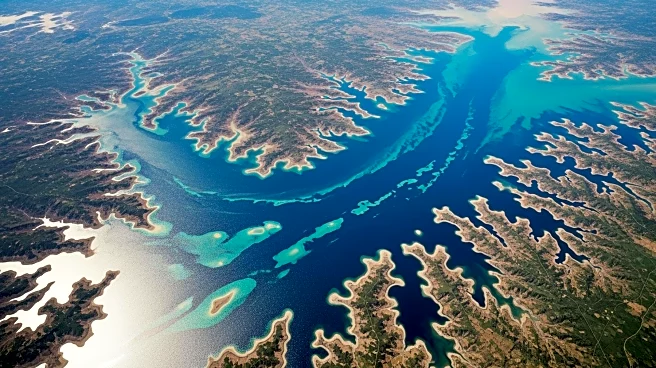
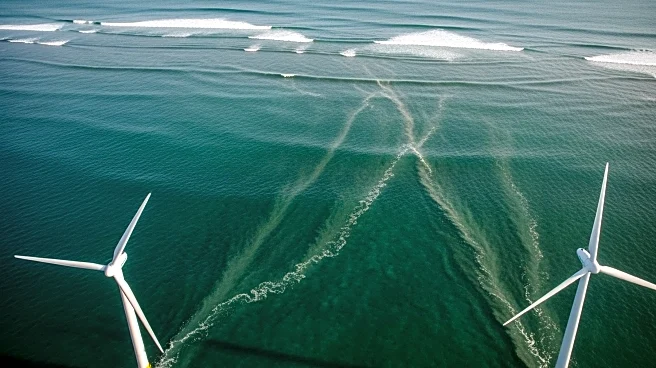
A study by the Helmholtz-Zentrum Hereon reveals that offshore wind farms in the North Sea are significantly altering sediment flows, affecting up to 1.5 million tons of mud annually. These changes impact the distribution of particulate organic carbon,
a key component in carbon sequestration. The study highlights that wind turbines influence sea stratification and currents, leading to sediment redistribution, particularly in the German Bight. This phenomenon could affect the long-term functioning of ecosystems and carbon storage capabilities in the region.
Why It's Important?
The findings underscore the environmental implications of expanding offshore wind energy, a critical component of the European Union's renewable energy strategy. The alteration of sediment flows could have long-term effects on coastal stability, navigational safety, and ecosystem health. Understanding these impacts is vital for sustainable wind farm development and for maintaining the ocean's role as a carbon sink, which is crucial for mitigating climate change.
What's Next?
Researchers plan to further investigate the effects on sensitive coastal areas like the Wadden Sea and assess the implications for carbon storage. These studies will inform future wind farm planning and help policymakers and industry leaders make environmentally responsible decisions. The research provides a foundation for balancing renewable energy expansion with ecological preservation.