







What's Happening?
A proposed 140-unit housing development in Swampscott and Marblehead, Massachusetts, is facing scrutiny from the neighboring Tedesco Country Club due to concerns about stray golf balls. The club's attorney, Chris Drucas, has urged developers to remove
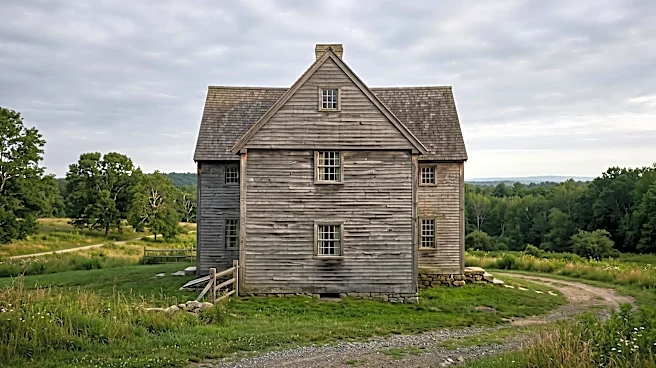
balconies from the planned homes, citing potential safety risks for future residents. The development, proposed by Glover LLC, includes 96 homes in Swampscott and 44 in Marblehead, near Vinnin Square. Local advocates have successfully worked to ensure the preservation of the pre-Revolutionary War General John Glover Farmhouse as part of the project. The Swampscott Planning Board has approved the project with conditions related to access, parking, and traffic, but it still requires approval from Marblehead's Planning Board. Discussions between the club and developers have included potential solutions like switching to a more distant tee on the nearest golf hole and planting trees as a buffer.
Why It's Important?
This situation highlights the growing tension between new housing developments and existing community amenities, particularly in densely populated areas of Massachusetts. The dispute over golf ball intrusion raises questions about property rights, liability, and the long-term coexistence of residential and recreational spaces. The preservation of the General John Glover Farmhouse underscores the importance of historical conservation within new urban planning initiatives, balancing modern housing needs with the protection of cultural heritage. The outcome of this project could set a precedent for how similar conflicts are resolved in other communities facing housing shortages and development pressures, influencing future zoning regulations and developer responsibilities regarding adjacent properties and historical sites.
What's Next?
The Glover LLC housing project still requires approval from Marblehead's Planning Board, which will be the next critical step in its development process. Further discussions and negotiations between the developers and Tedesco Country Club are likely to continue regarding mitigation strategies for stray golf balls, such as the removal of balconies, the planting of buffer trees, or adjustments to golf course operations. The Swampscott Planning Board's conditional approval indicates a path forward, but the Marblehead board's decision will be crucial. The broader debate over housing development in Massachusetts, including issues like density, infrastructure, and community impact, will continue to influence how such projects are reviewed and ultimately approved or rejected across the state.
Beyond the Headlines
The conflict over stray golf balls touches upon complex legal concepts such as prescriptive easements, where long-standing activities might establish a legal right to continue. If golf balls have historically crossed onto the development site, the country club might argue for a right to continue this activity, potentially impacting future homeowners. This case also reflects a broader societal challenge in balancing the demand for new housing with the desire to maintain existing community character and safety standards. The preservation of the General John Glover Farmhouse within a modern development exemplifies a trend towards integrating historical elements into contemporary urban landscapes, raising questions about how best to honor the past while building for the future. The resolution of this dispute could influence how developers approach site planning near established recreational facilities and how communities weigh the benefits of new housing against potential disruptions to existing residents and land uses.