





What's Happening?
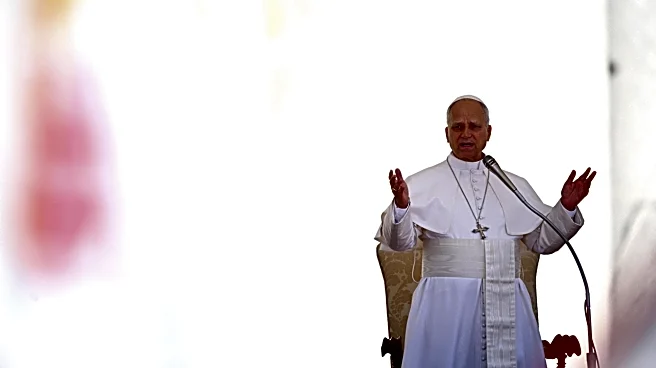
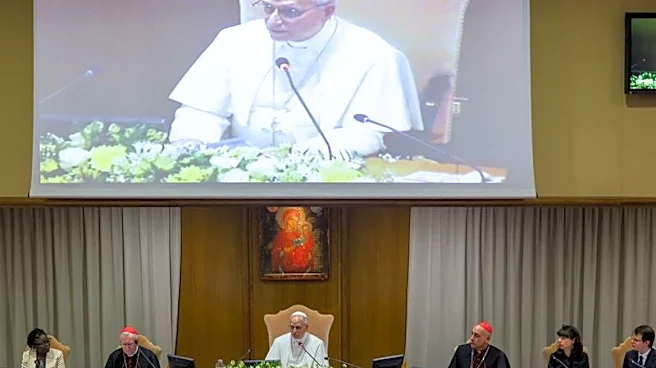
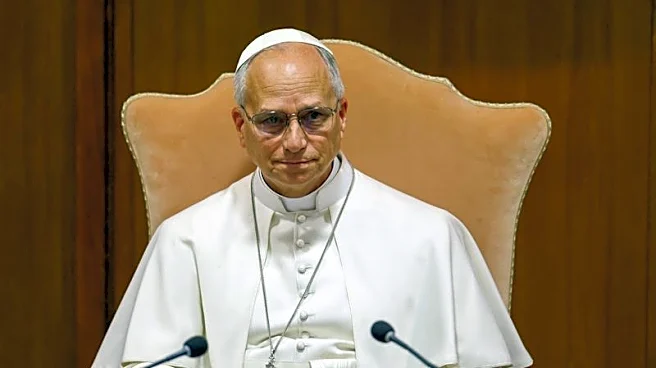
Pope Leo XIV has issued a manifesto calling for robust regulation of artificial intelligence (AI) to ensure it serves the common good rather than profit. The manifesto, titled 'Magnifica Humanitas,' highlights the potential dangers of AI, particularly
in warfare, and criticizes the concentration of power in the hands of a few private sector entities. The Pope's call for regulation comes amid ongoing legal battles between AI companies and the Trump administration over access to AI technology. The document is expected to become a benchmark in the debate over AI, urging developers and political leaders to prioritize ethical and spiritual guidelines in AI development.
Why It's Important?
The Pope's manifesto underscores the growing concern over AI's impact on society, including job displacement and ethical considerations in warfare. By advocating for regulation, the Pope is influencing the global conversation on AI governance, potentially affecting policy decisions in the U.S. and beyond. The call for ethical AI development aligns with broader societal concerns about technology's role in exacerbating inequality and concentrating power. The manifesto may prompt policymakers, researchers, and industry leaders to reevaluate their approaches to AI, balancing innovation with ethical responsibility.
What's Next?
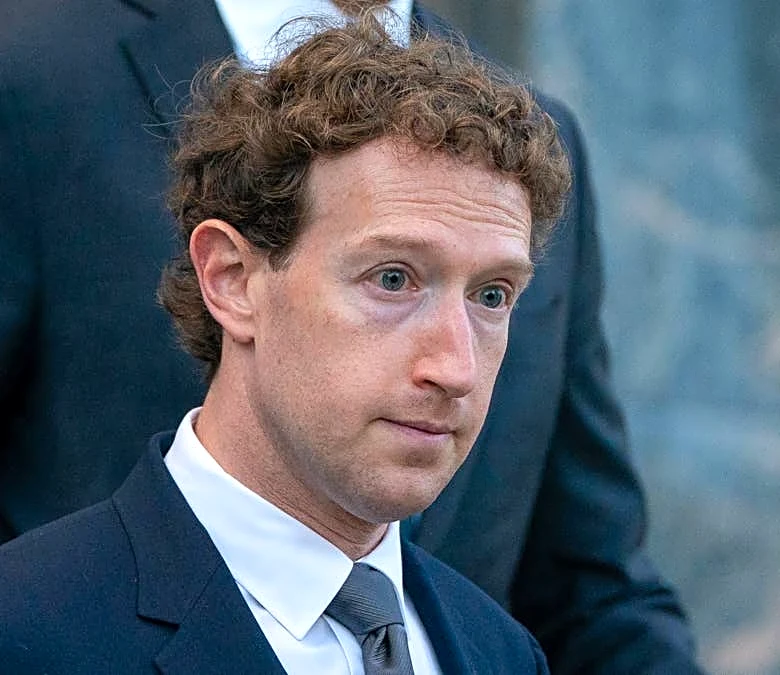
The manifesto is likely to spark discussions among policymakers, tech companies, and civil society about the future of AI regulation. As AI continues to evolve, stakeholders may need to collaborate on creating legal frameworks that ensure AI technologies are developed and used responsibly. The Vatican's engagement with Silicon Valley could lead to further dialogues on the ethical implications of AI, potentially influencing future regulatory measures. The ongoing legal battles between AI companies and the Trump administration may also be impacted by the Pope's call for regulation.