



What's Happening?
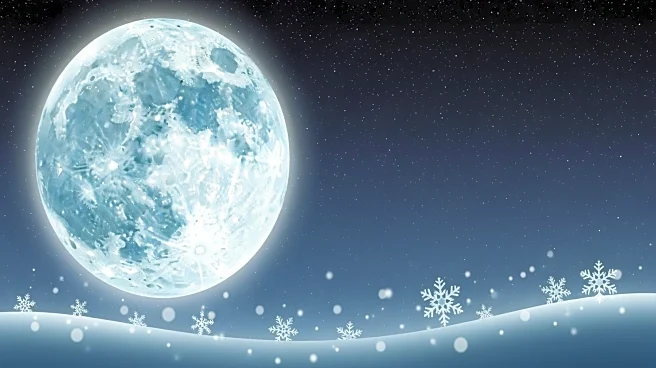
The February 2026 Snow Moon is set to captivate stargazers with its full illumination on February 1, 2026, at 5:09 p.m. EST. This celestial event will see the moon positioned opposite the sun, appearing fully illuminated from Earth. The best viewing time
is just after sunset when the moon rises in the east near the Cancer constellation. The phenomenon known as the 'moon illusion' will make the moon appear larger near the horizon. The Snow Moon, named for the heavy snowfall typical in February, holds cultural significance, being referred to as the 'Hungry Moon' or 'Bear Moon' by Indigenous North American tribes. It also coincides with cultural events in India, such as Guru Ravidas Jayanti and Magha Purnima.
Why It's Important?
The Snow Moon offers a unique opportunity for cultural reflection and scientific observation. For astronomers and enthusiasts, it provides a chance to observe the moon's path and its interaction with other celestial bodies, such as the occultation of Regulus. Culturally, it serves as a reminder of winter's challenges and the traditions that have developed around this time. The event also highlights the interconnectedness of global cultures, as it coincides with significant cultural and religious observances in different parts of the world.
What's Next?
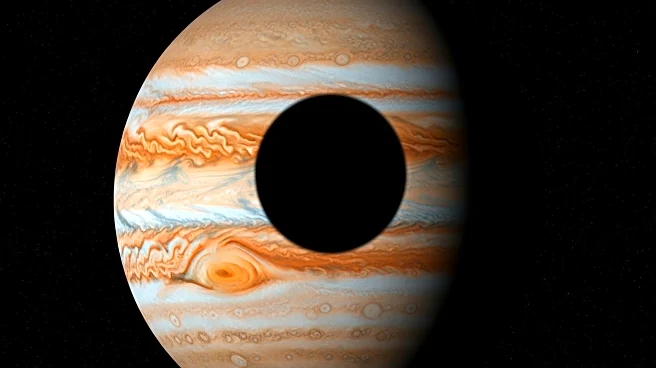
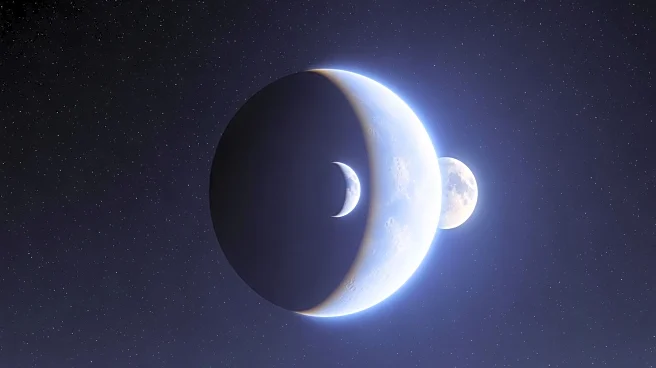
Following the Snow Moon, skywatchers can look forward to observing Jupiter and the constellations Gemini and Orion. The occultation of Regulus by the Snow Moon on February 2 will be a notable event for those in North America and Africa. This celestial alignment will briefly hide Regulus from view, offering a rare astronomical spectacle.