




What's Happening?
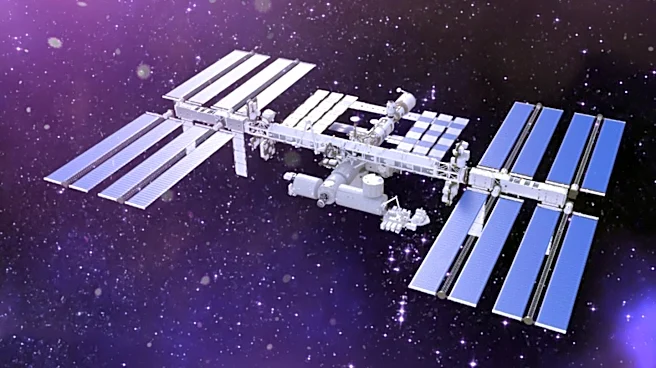
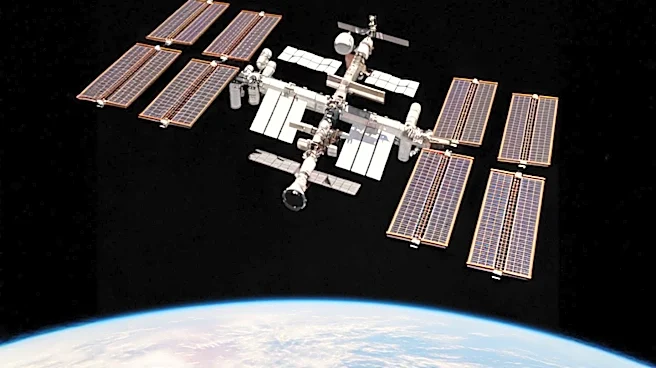
NASA's International Space Station (ISS) is currently hosting a series of biomedical research activities and crew swap operations. The Expedition 74 crew is engaged in various health studies, including blood pressure measurements, vein scans, and eye
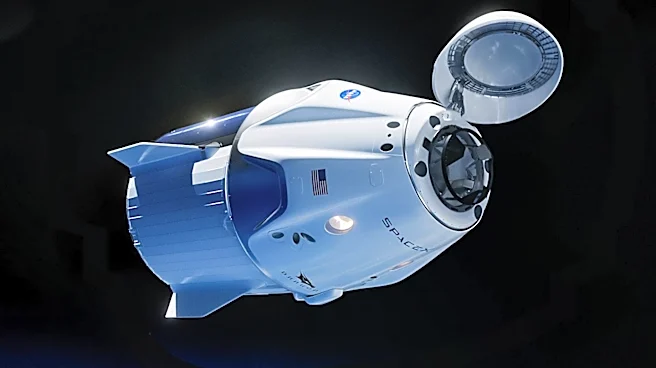
checks, to understand how the human body adapts to long-term spaceflight. These studies aim to provide insights that could lead to advanced treatments for both space-related and Earthbound health conditions. The Canadian Space Agency is testing its Bio-Monitor vest and headband for continuous health monitoring. Additionally, NASA flight engineer Anil Menon is acclimating to life aboard the ISS, while other crew members prepare for their return to Earth.
Why It's Important?
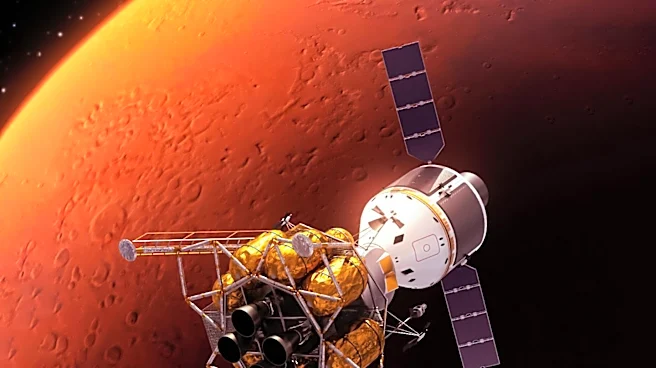
The research conducted on the ISS is crucial for advancing our understanding of human health in space, which is essential for future long-duration missions, such as those to Mars. The data collected can also have significant implications for medical research on Earth, potentially leading to new treatments and technologies. The crew swap operations ensure the continuity of scientific research and the smooth transition of responsibilities among astronauts, maintaining the ISS's role as a vital platform for international collaboration in space exploration.
What's Next?
As the current crew prepares to return to Earth, the focus will shift to the incoming crew members who will continue the ongoing research and experiments. The transition will involve the handover of mission responsibilities and the familiarization of new crew members with the station's operations. This cycle of crew rotations and research activities is expected to continue, supporting the ISS's mission to advance scientific knowledge and international cooperation in space.