




What's Happening?
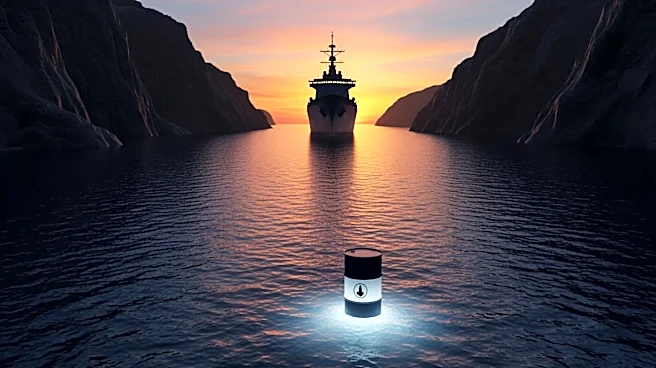
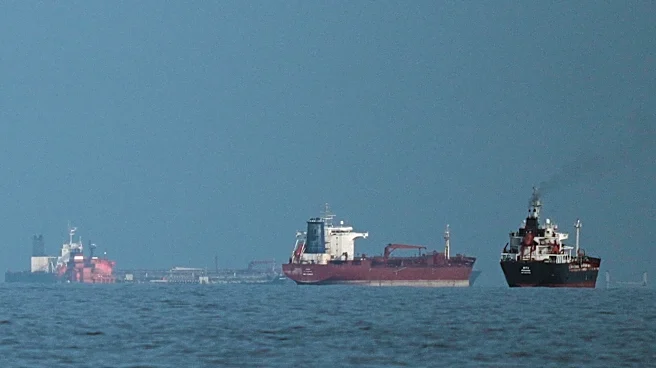
Iran has accused the United States of 'piracy' following President Trump's announcement to block the Strait of Hormuz, a critical oil chokepoint. Iran's armed forces declared the U.S. actions illegal and vowed to implement a 'permanent mechanism' to control
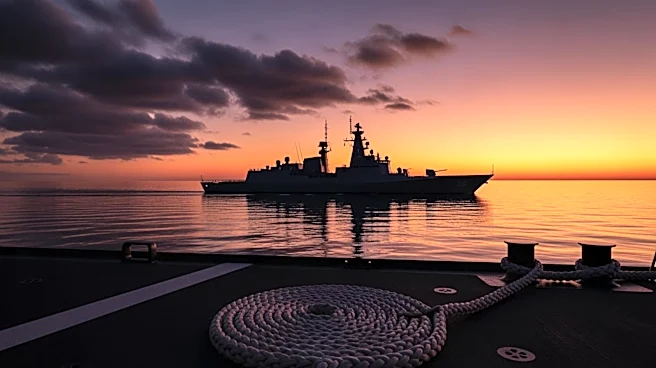
the strait. The Iranian government warned that if their ports were threatened, no port in the Persian Gulf and Sea of Oman would remain safe. This development comes as Iran's parliament speaker, Mohammad Bagher Ghalibaf, taunted that Americans would soon face higher gas prices due to the blockade. President Trump responded by stating that the U.S. Navy would begin blockading ships attempting to enter or leave the strait, labeling Iran's actions as 'world extortion'. The situation has escalated tensions between the two nations, with potential implications for global oil markets and regional security.
Why It's Important?
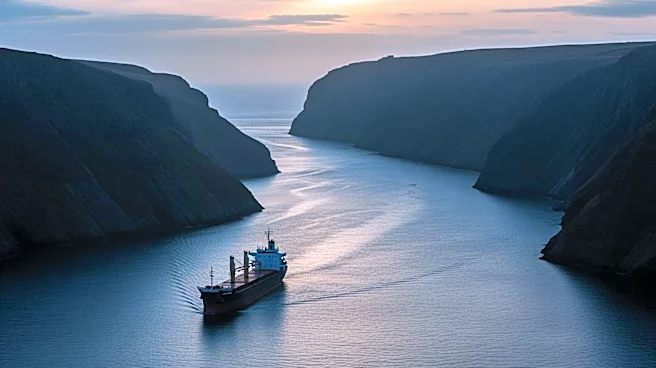
The blockade of the Strait of Hormuz by the U.S. could have significant repercussions for global oil supply and prices, as the strait is a vital passage for oil shipments from the Middle East. Any disruption could lead to increased oil prices, affecting economies worldwide, particularly in the U.S., where consumers might face higher gas prices. The standoff also highlights the ongoing geopolitical tensions between the U.S. and Iran, with potential impacts on international relations and regional stability. The situation underscores the strategic importance of the Strait of Hormuz and the potential for conflict in the region, which could involve other global powers and affect international trade routes.